
Apparel Sample Development: Strategic Technical Blueprint & Precision Prototyping
Mastering the transition from concept to market-ready garment. Discover how The Evans Group (TEG) leverages 20 years of luxury craftsmanship in Downtown Los Angeles to mitigate production risks, refine fit architecture, and optimize sample iterations for global fashion brands and emerging designers.
1. The Anatomy of Modern Apparel Sample Development
In the global garment supply chain, apparel sample development represents the critical bridge between creative vision and scalable manufacturing. It is not merely a preliminary exercise in sewing; it is an rigorous engineering process where aesthetic intent, textile dynamics, pattern geometry, and production viability converge. For procurement executives, creative directors, and brand founders, navigating sample development effectively determines whether a collection achieves commercial success or suffers from costly quality defects, timeline overruns, and margin erosion.
At The Evans Group (TEG), based in the Arts District of Downtown Los Angeles, we view sample development as a risk-mitigation framework designed to validate every technical vector of a garment before a single yard of bulk fabric is cut. Over our 20-year history of crafting luxury collections for over 2,000 emerging and established global brands, we have engineered a multi-stage prototyping pipeline that eliminates structural ambiguities and guarantees brand consistency.
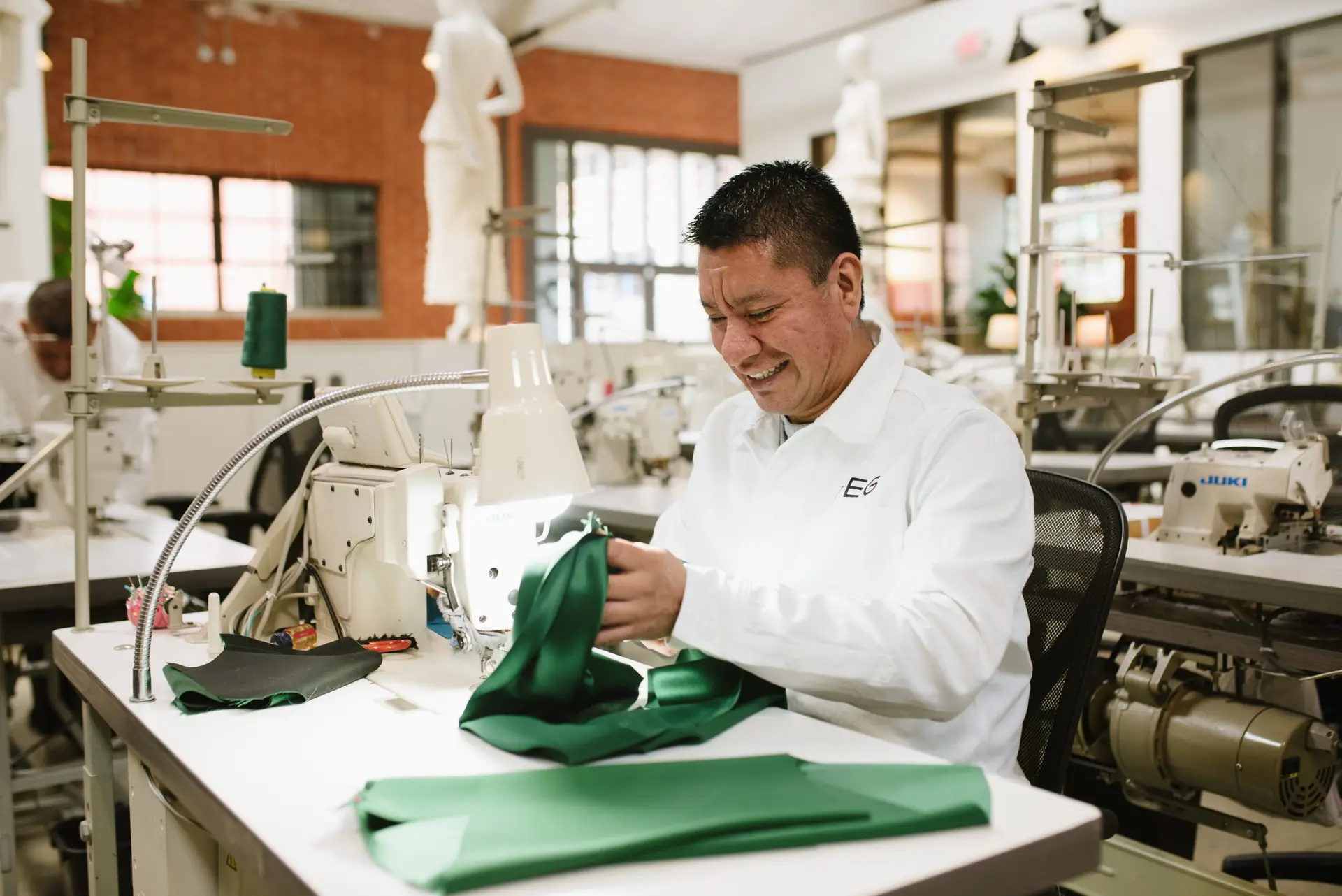
The 5 Essential Stages of Sample Development
A common point of failure for expanding apparel lines is confusing early design visualizer samples with factory-ready production prototypes. Achieving technical perfection requires a disciplined progression through distinct prototype iterations:
- First Proto Sample (Muslin / Toile): Evaluates basic 3D proportion, silhouette integrity, and structural balance using raw cotton muslin or substitute fabrics.
- Fit Sample (Primary Fabric): Uses the exact or near-identical drape of chosen textiles to audit ergonomic mobility, seam stress points, and tolerance windows.
- Salesperson Sample (SMS): Pristine, showroom-ready executions created for market weeks, buyer trade shows, and lookbook digital photography.
- Pre-Production Sample (PP Sample): Assembled using final production machinery, specified stitch density (SPI), finished trims, and graded tech packs.
- Top of Production Sample (TOP): Pulled directly from the first operational bulk manufacturing run to ensure zero drift from approved standards.
Information Gain Insights for Global Procurement Directors
Why do 42% of offshore sample cycles fail? Traditional overseas sourcing models rely on fragmented communication across time zones, where factory patternmakers interpret flat tech packs without contextual brand understanding. This leads to an average of 4.2 revision rounds per style. TEG's vertically integrated Los Angeles studio operates under a unified ecosystem—pairing master patternmakers, technical designers, and seamstresses under one roof—reducing average iteration cycles down to 1.8 rounds and shortening overall lead times by up to 60%.
2. Core Product Lines & Technical Sampling Capabilities
Different apparel classifications demand fundamentally distinct technical disciplines during prototype construction. Below is an overview of specialized category capabilities offered at TEG, highlighting technical execution parameters and construction requirements:
Eveningwear & Tailored Dresses
Sustainable Activewear & Swim
Structured Jackets & Menswear
Custom Hoodies, Tees & Blank Label
Eco-Friendly & Sustainable Lines
3. Global Procurement Trends in Apparel Sample Development
The macroeconomic landscape of fashion procurement has fundamentally transformed. Sourcing directors and independent brand creators no longer accept legacy offshore development timelines that require 6 to 9 months for physical sampling alone. Modern procurement strategies are characterized by four decisive shifts:
| Procurement Vector | Legacy Sourcing Model | Modern Agile Framework (TEG Standard) | Strategic Benefit |
|---|---|---|---|
| Development Hub | Far-offshore factories (Asia / East Europe) | Nearshore / Onshore Domestic Studio (Los Angeles, USA) | Real-time collaboration, zero customs delays, 80% faster shipping. |
| Minimum Order Quantity (MOQ) | High MOQs required to justify sample costs (1,000+ units) | Flexible Small-Batch (50 to 100 units studio, up to 500 factory) | Prevents inventory overstock and capital lockup; enables market testing. |
| Sample Iteration Cycle | Sequential physical shipments taking 4–6 weeks per sample | Digital pre-fit reviews + rapid 1–2 week physical turnaround | Accelerates time-to-market by 3 to 4 months per seasonal drop. |
| Labor & Eco Traceability | Opaque multi-tiered subcontractors; compliance risks | 100% Vertically integrated in LA; audited ethical wages | Guarantees ESG compliance and protects premium brand reputation. |
| Pattern Ownership | Factory retains proprietary CAD files & marker tech | Full client ownership of master digitized CAD patterns | Protects intellectual property and gives brands complete operational freedom. |
The Rise of Low-MOQ Prototyping-to-Production Pipelines
High-end consumers now demand rapid style drops and extreme exclusivity. Consequently, brands are abandoning massive inventory gambles in favor of data-backed, small-batch releases. Successful apparel sample development is now designed from day one to feed into low-minimum production runs. At TEG, our sample development team uses the exact same seamstress standards and equipment setup as our production line, guaranteeing that your approved sample is a flawless representation of the bulk order.
4. Future Technologies and Prototyping Trends
The intersection of advanced software and traditional garment craftsmanship is redefining the boundaries of apparel sample development. Brands that leverage technical innovations during the prototyping phase achieve dramatically higher fit consistency while minimizing material waste.
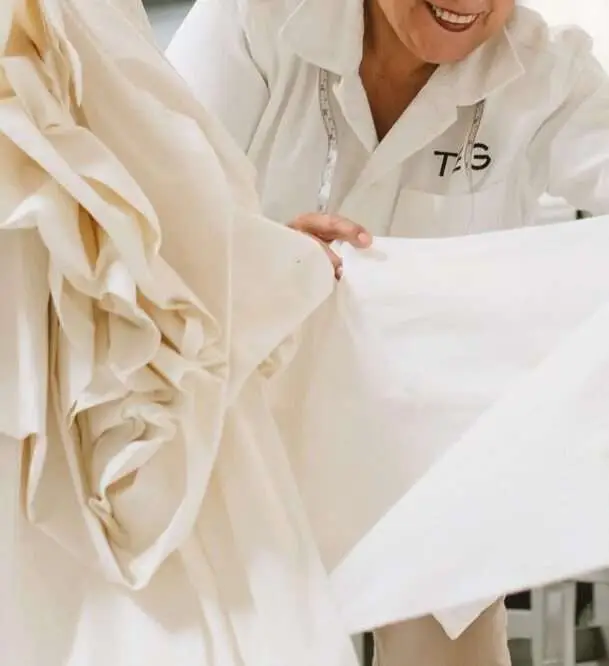
Key Technological Advancements Shaping Sampling
- 3D Digital Twin Simulation & Virtual Draping: Utilizing CLO3D and Optitex software allows master patternmakers to simulate fabric tension, drape, and body movement prior to physical cutting. Virtual sampling cuts initial physical sample revisions by up to 50%.
- Automated Nesting and Zero-Waste Markers: Advanced computer-aided design (CAD) algorithms optimize pattern piece layout on fabric rolls, increasing fabric utilization yield up to 92% and preventing costly textile waste during sample cutting.
- Digital Tech Pack Standardizations: Moving from static PDF spreadsheets to dynamic, cloud-based Tech Packs with integrated 3D measurement tables, digital bill of materials (BOM), and interactive stitch callouts ensures flawless technical execution.
- Bio-Based & Next-Gen Fiber Compatibility: Prototyping with lab-grown leather, recycled ocean poly, and unblended mono-materials requires customized needle selections, specialized feed dogs, and adjusted seam allowances to preserve fabric integrity.
5. The Evans Group (TEG) Advantage: 20 Years of Ethical Mastery
Founded in 2005 by Jennifer Evans, The Evans Group (TEG) was established to provide an ethical alternative to high-volume, low-quality apparel manufacturing. Located in the heart of Los Angeles, TEG has stood as a beacon of high-end fashion development and ethical production for two decades.
Dedicated Production Team
Studio & Factory Levels
Made in Los Angeles
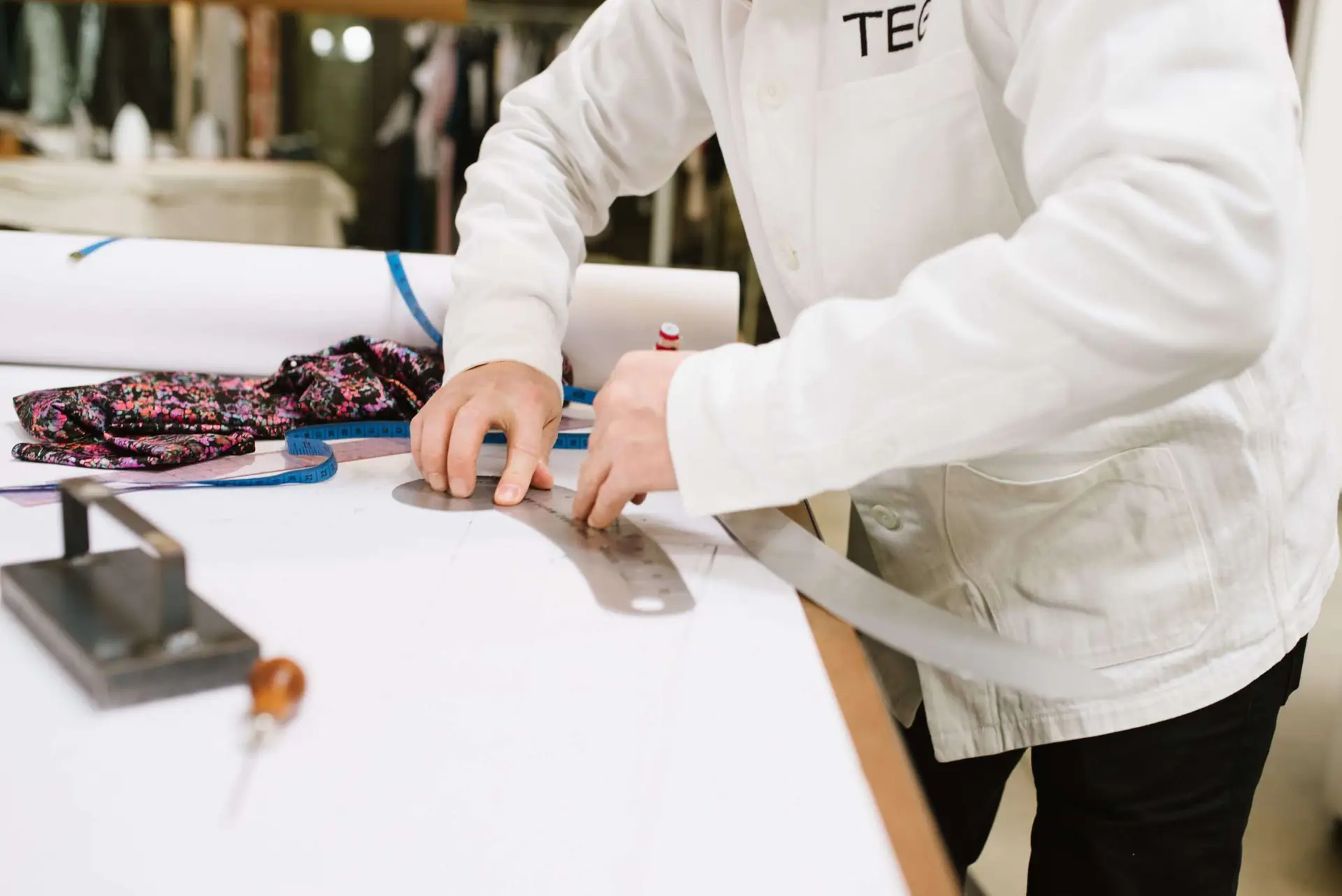
Supporting Emerging & Established Brands Alike
Whether you are an established global luxury house needing specialized couture sampling or an emerging designer launching your first capsule collection through our Mentorship Program or Blank Label Line, TEG provides tailored support.
We handle every step in-house: Concept Consultation, Fabric & Trim Sourcing, Custom Patternmaking, Muslin Fittings, Physical Prototype Sewing, Tech Pack Creation, Grading, Marking, and Final Cut & Sew Manufacturing.
6. Apparel Sample Development: Frequently Asked Questions
Below are authoritative answers to the most common technical questions asked by fashion procurement managers, fashion founders, and global buyers searching for sample development solutions:
What is the standard timeline for apparel sample development?
At TEG, the standard apparel sample development cycle typically ranges from 4 to 8 weeks, depending on design complexity, fabric availability, and trim sourcing.
The process includes initial pattern creation (1-2 weeks), muslin fit sample (1-2 weeks), fitting review and revisions (1 week), and final prototype sample in actual fabric (2 weeks). Rush services are also available for runway or press deadlines.
What documents and materials are required to start the sampling process?
To achieve seamless sample execution, we recommend providing:
- Tech Pack: Including flat sketches (front/back), point of measurement (POM) specification sheets, and stitch details.
- Reference Garments: Physical garments to demonstrate desired fit, drape, or pocket construction.
- Bill of Materials (BOM): List of fabrics, linings, threads, zippers, buttons, and brand labels.
Don't have a Tech Pack? TEG's in-house design team can create complete, factory-ready technical packages from scratch based on your sketches or photos.
How much does apparel sample development cost for a new collection?
Sample development costs depend on garment style complexity, fabric type, and pattern intricacy. Generally, developing a complete production-ready sample package (which includes patternmaking, muslin fitting, pattern adjustments, and final sample sewing) ranges between $500 to $2,000+ per style.
While prototyping costs more per piece than bulk production, thorough sampling eliminates structural errors that could otherwise ruin thousands of units during bulk cut & sew manufacturing.
What is the difference between a Muslin (Toile) sample and a Fit Sample?
A Muslin sample (or Toile) is sewn using inexpensive, unbleached cotton fabric to quickly check the pattern’s 3D geometry, proportion, and line drape on a dress form or live model without risking expensive shell fabric.
A Fit Sample is made using the actual production fabric (or an identical weight alternative) to evaluate how the fabric's natural stretch, recovery, density, and drape interact with the pattern specifications.
Who owns the physical patterns and digital CAD files after sample development?
At TEG, 100% of the intellectual property, physical patterns, and digitized CAD pattern files belong to the client upon payment completion. Unlike many offshore facilities that hold patterns hostage to lock you into their factory, TEG provides complete asset ownership and transparency.
How does TEG handle pattern grading across different size ranges?
Once your sample size (typically Small or Medium) is fit-approved, our master patternmakers perform computerized pattern grading across your entire size spectrum (e.g., XS to 3XL). We apply precise grade rules tailored specifically to your target customer demographic and fabric elasticity profiles.
Can TEG assist with sustainable fabric and trim sourcing during development?
Yes. TEG maintains an extensive global library of eco-friendly fabric suppliers offering organic cotton, linen, silk, recycled synthetics, deadstock textiles, and certified eco-dyes. Our sourcing specialists help you select materials that meet both aesthetic and sustainability goals.
Ready to Begin Your Sample Development Journey?
Partner with North America’s leading fashion development team. Protect your investment, refine your garments, and bring your vision to market with uncompromising quality.








The TEG Standard
Sustainable & Ethical
Every garment sample is produced with fair labor practices and eco-friendly materials. We are committed to responsible manufacturing that respects craftspeople and the planet.
Learn More →Precision Prototyping
From studio-level sampling for intricate runway looks to scalable factory-level patterns, we deliver uncompromising fit accuracy at every step.
Learn More →Vertically Integrated
Design, fabric sourcing, technical patterns, fitting, and sample sewing—all under one roof in Downtown Los Angeles. One team, zero handoff confusion.
Our Story →