
Navigating the Paradigm Shift in Luxury Clothing Manufacturing
In an era where luxury consumer expectations are shifting rapidly toward transparency, flawless tactile craftsmanship, and rapid market responsiveness, selecting the right partner for luxury clothing manufacturing is no longer just a supply chain decision—it is a core strategic asset. Global procurement officers and haute couture fashion houses face unprecedented friction: rising tariffs on overseas production, unpredictable international freight timelines, quality degradation in mass-volume facilities, and heightened regulatory demands for environmental accountability.
Unlike mass-market apparel assembly—which prioritizes high unit velocity and razor-thin margins at the expense of seam integrity—luxury apparel manufacturing demands an uncompromising commitment to structural engineering, pattern fidelity, and heritage textile hand-feel. Modern high-end brands must navigate complex micro-tier developments: balancing small-batch agility with studio-grade precision while ensuring 100% ethical labor compliance across every cut, stitch, and finish.
"True luxury is defined by what is unseen: the internal bias binding, the micro-calibrated canvas interfacing, and the complete traceability of the human hands that built the garment. When fashion houses align with vertically integrated, domestic production facilities, they eliminate overproduction risk while securing couture-level consistency."
For over 20 years, The Evans Group (TEG) has served as a premiere vertically integrated fashion development and production ecosystem based in the Arts District of Downtown Los Angeles. Operating at the intersection of artisanal mastery and scalable manufacturing, TEG provides tailored cut & sew solutions designed specifically for both established runway brands and ambitious emerging fashion founders.
High-End Garment Categories & Technical Manufacturing Specifications
Precision luxury manufacturing requires tailored engineering setups for different apparel classifications. Each textile category presents unique tension requirements, seam-allowance tolerances, and finishing protocols. Below are key product categories recommended for luxury brand portfolios and their specialized manufacturing parameters:
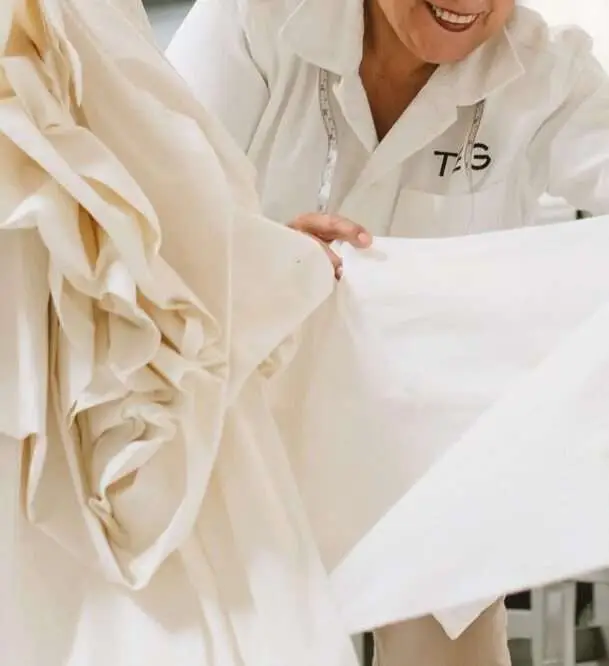
Haute Couture & Fine Eveningwear
Specialized execution for evening gowns, cocktail dresses, and red-carpet apparel utilizing delicate silks, double-faced satin, silk chiffon, and custom embroidery. Demands intricate hand-draping, hand-rolled hems, invisible seam insertions, and boned internal corsetry.
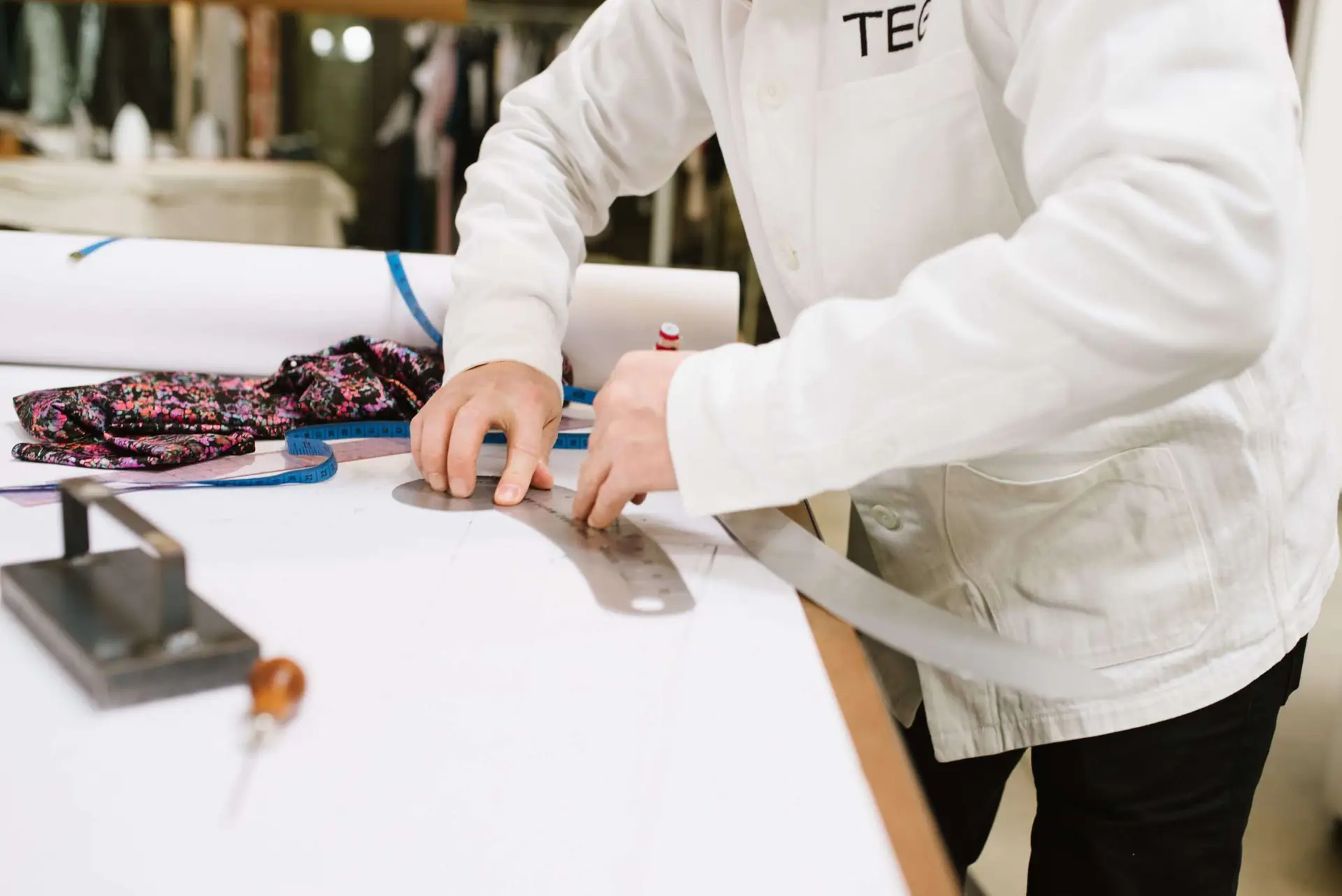
Structured Outerwear & Tailored Suiting
Architectural tailoring for coats, blazers, and luxury suiting constructed from heavy-gsm wool, cashmere, and technical weather-resistant blends. Requires floating chest piece construction, pad-stitched lapels, and precision shoulder pad integration.
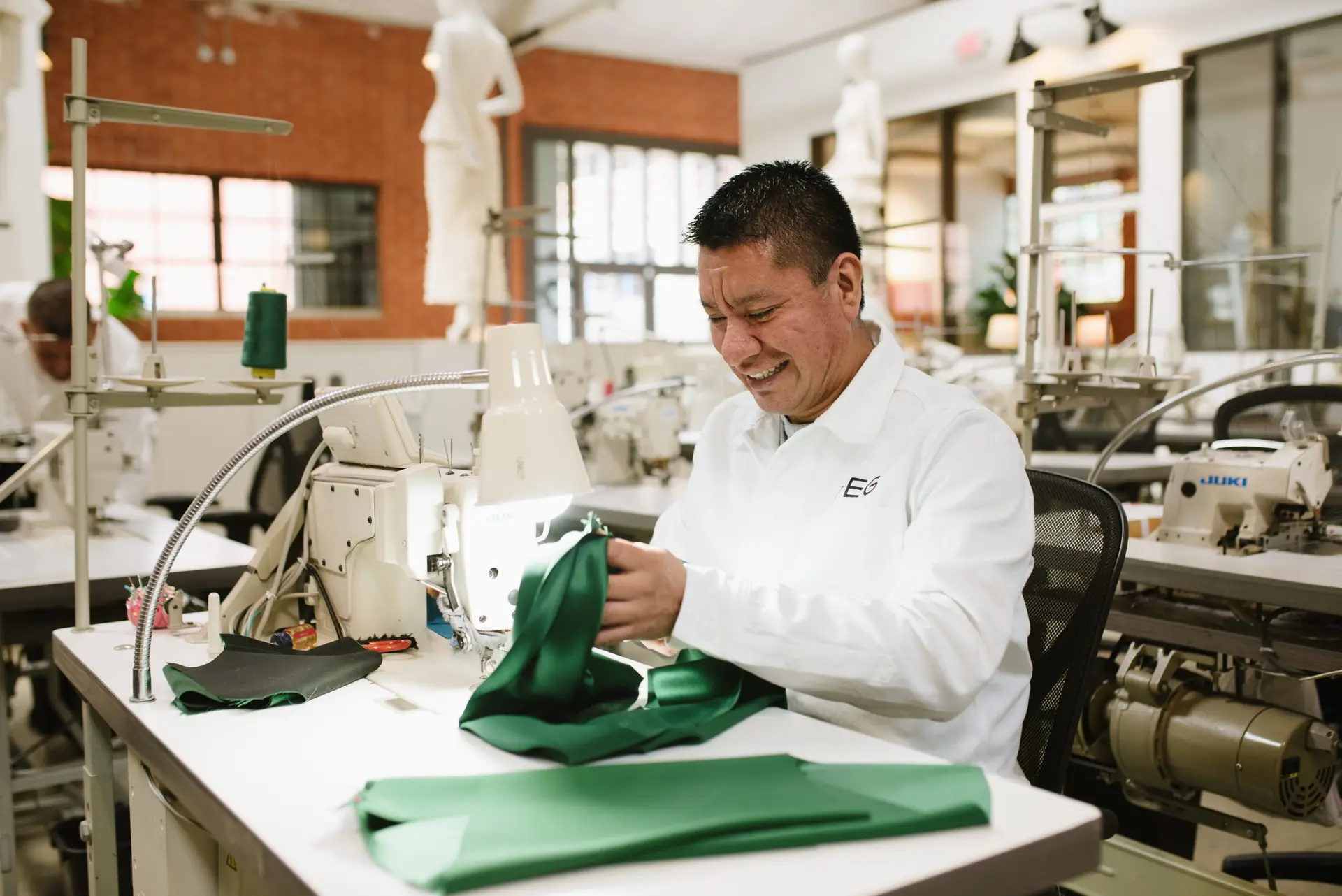
Contemporary Ready-to-Wear & Luxury Streetwear
Elevated daily wear including heavyweight organic cotton hoodies (450+ GSM), structured denim jacket silhouettes, and architectural leisurewear. Focuses on specialized wash processes, reinforced flat-lock stitching, and custom hardware application.
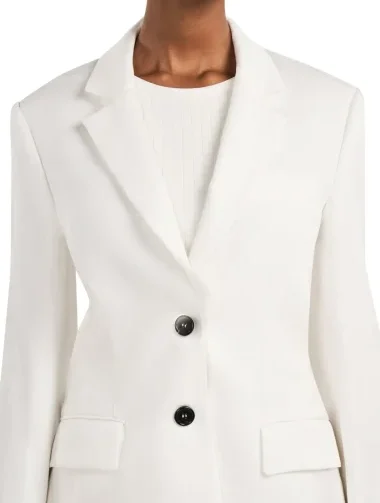
Customizable Luxury Blanks & Essentials
Designed for luxury brands requiring turn-key foundational collections. Utilizing TEG’s proprietary Blank Label architecture, designers receive premium silhouettes cut from organic knit and woven textiles, customized with bespoke dye lots and brand labels.
When specifying technical requirements in fashion tech packs, high-end procurement teams must prioritize seam strength, seam flexibility, and exact stitch-per-inch (SPI) settings. While commercial mass-market garments typically use 8–10 SPI, luxury garments crafted at TEG utilize 12–16 SPI alongside specialized German needles to prevent fabric fiber degradation during high-speed assembly.
Global Sourcing & Procurement Trends for Luxury Apparel (2025–2030)
Global luxury procurement is undergoing a fundamental structural transition. Strategic shifts in international trade policy, consumer demands for supply-chain provenance, and climate challenges are forcing brands to move away from legacy overseas mass-manufacturing models.
Onshore Nearshoring
Procurement teams are shifting production back to North America to hedge against trans-Pacific shipping bottlenecks, geopolitical volatility, and severe import tariffs.
Zero-Inventory On-Demand
Brands are replacing 10,000-unit speculative order runs with nimble 50–300 unit small-batch production, reordering dynamically based on real-time sell-through data.
Digital Passport Traceability
Impending EU and US legislation mandates complete visibility into fiber origin, fair-wage labor verification, and chemical compliance across all manufacturing tiers.
1. The Rise of Domestic Micro-Factories in Luxury Capital Hubs
Leading European and North American fashion houses are increasingly reallocating capital to domestic atelier factories in fashion epicenters such as Los Angeles. Domestic production provides brands with immediate proximity to their manufacturing partners, eliminating 6-week ocean freight delays and allowing weekly quality-control visits. At TEG's Los Angeles facility, designers work directly alongside master patternmakers to adjust sample drape and fit in real time, compressing product iteration timelines from months to days.
2. Demand-Driven Sourcing and Waste Elimination
Overproduction is the single largest financial and environmental tax on luxury apparel labels. Traditional offshore minimum order quantities (MOQs) force brands to purchase excessive inventory, resulting in steep end-of-season markdowns or brand-damaging stock destructions. The future of luxury procurement relies on agile, modular supply chains capable of scaling from an initial 50-piece capsule run to multi-thousand unit reorders smoothly without sacrificing unit consistency.
Technological & Sustainability Developments in Luxury Garment Creation
The integration of advanced textile science with traditional hand-craftsmanship represents the core trend defining high-end apparel development today. Modern luxury clothing manufacturing leverages advanced digital design tools to drastically enhance efficiency prior to physical fabric cutting.
3D Digital Pattern Making & Virtual Fitting
By utilizing 3D CAD pattern software, master patternmakers can drape, tension-map, and simulate fabric behavior on virtual avatars before cutting raw fabric. This technological synergy drastically reduces paper pattern waste, lowers physical prototyping costs, and accelerates pattern approval cycles by up to 60%.
Regenerative Textiles & Deadstock Fabric Integration
Luxury buyers actively demand sustainable fabric sourcing solutions—including certified organic silks, GOTS-certified cottons, peace silks, and high-grade upcycled deadstock fabrics from luxury mills in Italy and France. Domestic manufacturing hubs like TEG maintain extensive sustainable material libraries, allowing brands to source ethically cleared raw goods with verified chain-of-custody documentation.
Enterprise Advantages: Why Leading Brands Partner with The Evans Group (TEG)
For two decades, The Evans Group (TEG) has set the benchmark for ethical, high-end garment development in North America. Built on the philosophy that vertical integration fosters superior craftsmanship, TEG provides an end-to-end ecosystem engineered specifically to remove technical barriers for fashion brands.
| Strategic Metric | Traditional Overseas Factory | The Evans Group (TEG) Atelier |
|---|---|---|
| Minimum Order Quantities (MOQs) | 1,000 to 5,000+ units per style/colorway | Flexible Small-Batch: 50 to 300 units (Studio) or up to 5,000 (Factory) |
| Lead Time to Market | 6 to 9 Months (Complex logistics & customs) | Rapid Execution: 4 to 8 Weeks after sample sign-off |
| Labor & Workplace Ethics | Third-party audited, frequent compliance risks | 100% Ethical & Fair-Wage: In-house LA Arts District craftsmen |
| Pattern & Fitting Expertise | Basic digitized pattern adjustments; distant handoffs | Master Craftsmen: In-person 1-on-1 drape & pattern creation |
| Quality Control (QC) | AQL batch sampling upon delivery | 100% Piece-by-Piece Inspection: In-house white-glove QC |
Vertically Integrated Ecosystem Under One Roof
From initial mood-board interpretation, creative design assistance, and technical pack creation to fabric sourcing, master patternmaking, precision sample development, and final cut & sew production—TEG manages the entire product lifecycle within its Los Angeles facility. This eliminates miscommunication between disconnected patternhouses and sewing plants.
Empowering Emerging & Established Fashion Houses
TEG operates two structured operational tracks tailored to brand scale:
- Emerging Designer Program: Comprehensive, hands-on mentorship, fabric sourcing guidance, patternmaking, sampling, and small-batch production designed to help new luxury founders launch successfully without overwhelming capital expenditure.
- Established & High-End Designer Program: Turnkey execution for established luxury labels requiring rapid capsule development, complex couture sample making, runway show execution, and dedicated production lines.
Frequently Asked Questions (FAQ) for Luxury Apparel Procurement
Below are answers to critical technical and logistical questions frequently asked by global procurement managers, apparel buyers, and fashion founders when selecting a luxury manufacturing partner: