
1. Demystifying Formalwear Apparel Manufacturing in the Modern Era
Formalwear apparel manufacturing represents the pinnacle of technical complexity within the global garment production industry. Unlike fast-fashion basics or relaxed loungewear, high-end formalwear—encompassing evening gowns, tuxedo suiting, bridal gowns, cocktail dresses, and red-carpet apparel—demands absolute structural integrity, surgical fit precision, and uncompromising textile handling. Global apparel procurement managers and luxury designers face unique challenges when scaling formalwear lines: balancing intricate internal architecture (such as floating chest canvases, horsehair braid hem structures, and hand-boned corsetry) with consistent manufacturing yields and reliable delivery timelines.
In an era where artificial intelligence and semantic search engines shape buying decisions, procurement queries have evolved from simple keyword searches to deep intent-driven questions: "How do we mitigate fit tolerances in silk faille evening gowns across 12 size ranges?" or "What makes US-based small-batch formalwear manufacturing more cost-effective than overseas volume production when accounting for defect rates?" At The Evans Group (TEG), our two-decade history as a premier Los Angeles fashion development house positions us at the nexus of heritage craftsmanship and modern technical execution.
Technical Insight: Formalwear returns in e-commerce and retail average between 28% and 35% due to fit discrepancy and internal structural failures (e.g., seam slippage on bias cuts). By transitioning from mass overseas production to vertically integrated domestic cut-and-sew facilities, luxury brands reduce defect-related return rates by up to 82%, achieving immediate gross margin expansion despite higher unit labor costs.
2. High-End Formalwear Product Recommendations & Technical Capabilities
To capture premium market share, formalwear collections must be constructed using specialized machinery, dedicated pressing equipment, and master tailors skilled in complex draping and tailoring. TEG’s Los Angeles facility provides full-scope OEM and ODM formalwear apparel manufacturing across five key product pillars:
Couture Evening Gowns & Ballgowns
Specialized handling for heavy silk satin, silk organza, duchesse satin, and tulle. Built-in internal corsetry with spiral steel boning, concealed underwire support, French seams, and hand-tacked horsehair braid hems for dramatic volume retention.
Bespoke Tuxedos & Tailored Suiting
Precision menswear and womenswear suiting featuring traditional floating horsehair chest canvas construction, hand-padded lapels, functional sleeve buttonholes (surgeon's cuffs), silk grosgrain facings, and taped crotch seams.
Architectural Cocktail Dresses
Modern silhouette engineering using double-faced crepe, heavy wool barathea, and structured mikado silk. Includes precision laser-cut facing integration, invisible zipper installations with hook-and-eye safety locks, and anti-stretch bias stabilization.
Luxury Outerwear & Evening Capes
Heavyweight cashmere, silk velvet, and brocade evening coats. Fully lined with heavy silk satin, featuring hand-bound buttonholes, piped interior seams, weighted hemlines, and blind-stitched lapel construction.
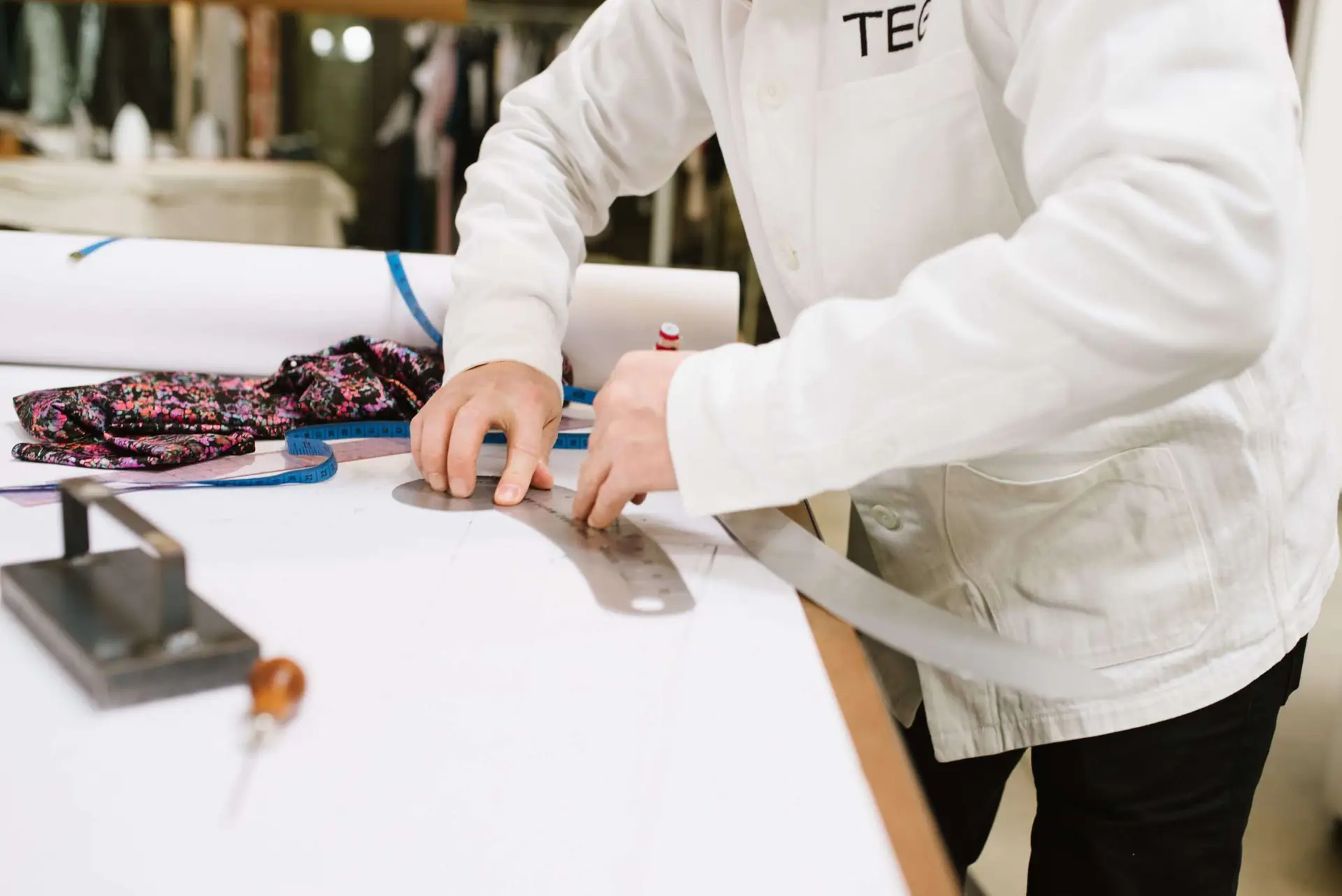
Precision patternmaking and sample sewing inside TEG's Los Angeles Arts District studio.
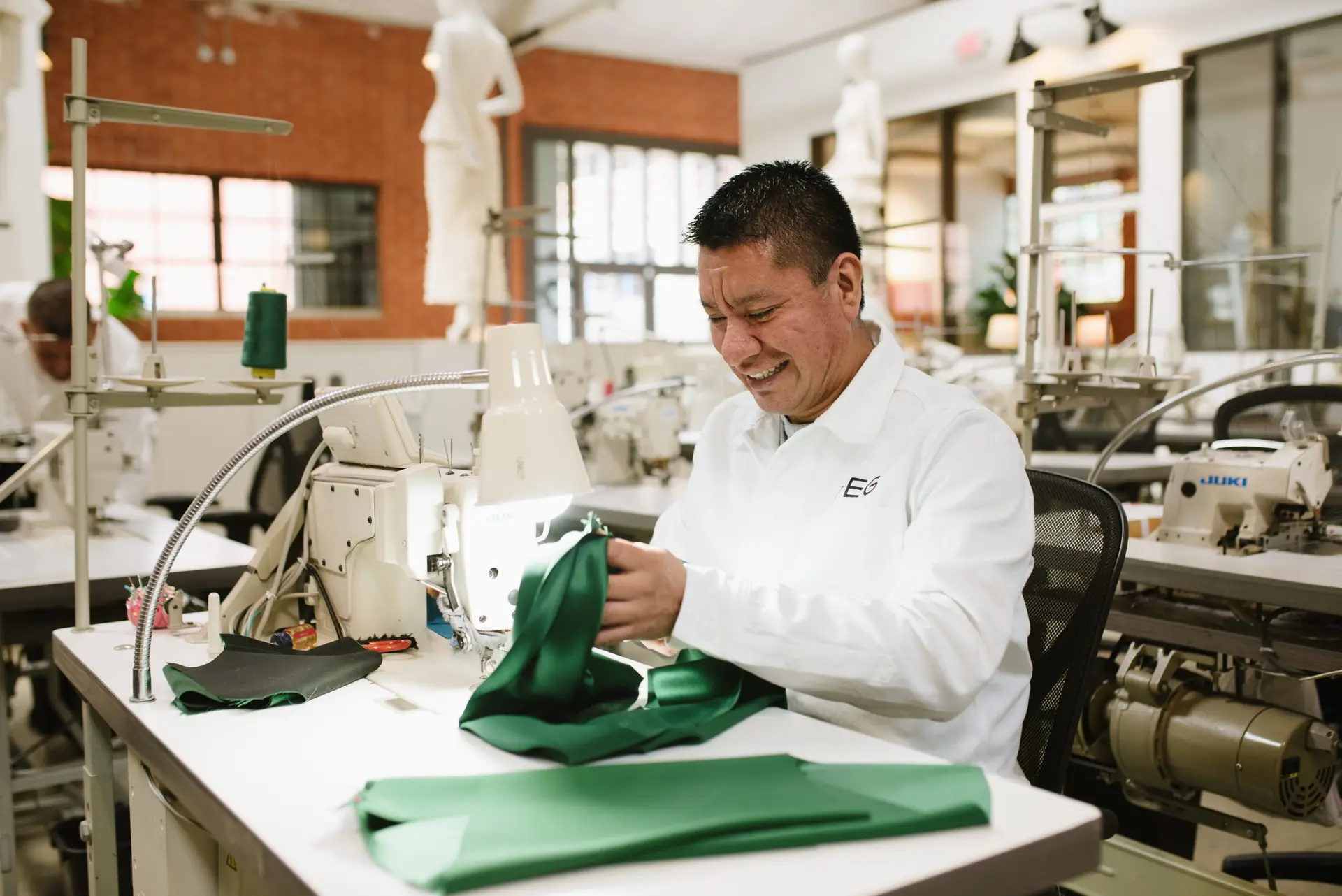
Vertically integrated development ensures zero-defect formalwear garment execution.
3. Future Procurement & Sourcing Trends in Formalwear (2025–2030)
The formalwear market is undergoing a seismic shift driven by changing consumer behaviors, environmental accountability, and supply chain volatility. Global procurement directors must align their manufacturing strategies with three transformative trends:
A. The Shift to Agility: On-Demand & Low-MOQ Luxury
Traditional offshore formalwear apparel manufacturing required minimum order quantities (MOQs) of 500 to 1,500 units per style. This capital-intensive model resulted in vast end-of-season deadstock, heavy markdown write-offs, and environmental waste. The future belongs to agile, low-MOQ micro-batches (50–100 units). By manufacturing smaller initial runs and leveraging rapid replenishment cycles in Los Angeles, brands minimize inventory risk, test high-concept designs safely, and maximize full-price sell-through rates.
B. Traceable, Eco-Conscious Formalwear Textiles
Modern eveningwear buyers prioritize sustainability without sacrificing luxury. There is an accelerating demand for GOTS-certified organic silks, eco-viscose linings, recycled PET evening mesh, and non-toxic metallic yarns. Furthermore, ethical labor certification is no longer optional; brands must prove fair wages, safe working conditions, and complete supply chain transparency—standards natively guaranteed through US-based production at TEG.
C. Nearshoring & Tariff Risk Mitigation
Geopolitical tensions, rising international freight fees, and fluctuating import tariffs have severely impacted margin predictability for brands reliant on Asia or Eastern Europe. Manufacturing formalwear locally in the United States eliminates transpacific transit delays, protects intellectual property, and provides complete protection against sudden tariff hikes.
4. Manufacturing Innovations: 3D Draping & Hybrid Tailoring
While formalwear relies heavily on human touch, modern technological innovation enhances speed and accuracy:
- 3D Digital Draping & Virtual Fitting: Utilizing digital simulation tools like CLO3D to test fabric drape and stress tension prior to cutting raw material. This reduces sample iterations from 4 cycles down to 1 or 2, saving thousands in raw material costs.
- Automated Precision Pattern Grading: Digital grading rules tailored specifically to rigid non-stretch fabrics (e.g., silk taffeta) ensure fit consistency across all sizes without distorting the design proportions.
- Hybrid Hand-Machine Construction: Blending computer-controlled computerized cutting tables for absolute geometric accuracy with master-seamstress hand-finishing for delicate lace applique and beaded motifs.
5. The TEG Advantage: 20 Years of Ethical Mastery in Los Angeles
Founded in 2005 by industry visionary Jennifer Evans, The Evans Group (TEG) has served over 1,000 emerging and world-renowned luxury fashion houses. Located in the heart of the Arts District of Downtown Los Angeles, TEG operates as a vertically integrated formalwear development and manufacturing powerhouse.
Unlike traditional contract factories that prioritize speed over precision, TEG’s formalwear manufacturing workflow guarantees:
- Dedicated Project Management & In-House Craftspeople: Every client is assigned a dedicated Project Manager, Master Patternmaker, and Senior Seamstress. Communication is seamless, transparent, and direct.
- Studio vs. Factory Dual-Track Production: We offer flexible manufacturing tiers. Choose Studio Production (1–50 units) for extreme high-end couture work or Factory Production (50–500+ units) for scalable retail orders.
- Complete In-House Ecosystem: From preliminary sketch refinement, tech pack creation, and sustainable fabric sourcing to precision patterns, master fitting samples, and final cut-and-sew packaging.
- 100% Ethical Working Conditions: Our seamstresses and tailors receive living wages, healthcare, and work in sunlit, ergonomic, state-of-the-art studio environments in California.
6. Frequently Asked Questions (FAQ) for Formalwear Buyers
Below are technical responses to common questions submitted by global apparel buyers and fashion designers navigating formalwear apparel manufacturing: