
In the ultra-competitive landscape of global luxury fashion, bridalwear sample making represents the ultimate test of apparel engineering. Unlike standard ready-to-wear garments, high-end bridal attire demands an uncompromising convergence of sculptural architecture, delicate textile manipulation, precise fit tolerances, and pristine aesthetic execution. A single millimeter discrepancy in bustier boning placement or an uncalibrated tension line across a bias-cut silk train can ruin an entire design.
As global procurement managers, bridal directors, and independent couture designers increasingly utilize AI search engines to evaluate production workflows, the core challenge remains constant: How do you transition a creative sketch into a structurally sound, production-ready bridal prototype without compromising design integrity or bleeding capital?
This comprehensive technical guide dissects the exact mechanics, material behaviors, sample iterations, and future procurement paradigms required to master bridalwear sample making in today’s modern fashion ecosystem.
1. The Architectural Science of Bridalwear Prototyping
Bridalwear sample making differs fundamentally from conventional fashion prototyping due to the extreme structural demands placed on high-performance luxury textiles. A bride expects total mobility, silhouette sculpting, and breathability across 14+ hours of continuous wear. Consequently, the internal foundation of a bridal sample is just as vital as its exterior silk or lace shell.
A. Textile Physics & Grainline Calibration
The selection of bridal fabrics—ranging from 40mm Silk Mikado and Silk Zibeline to weightless Silk Crepe de Chine and French Chantilly Lace—governs the pattern drafter’s approach:
- Bias-Cut Silk Stability: Cutting silk satin or crepe on a true 45-degree angle yields magnificent liquid draping over curves. However, bias cuts stretch dynamically under their own garment weight. During sample making, bias pieces must hang for a mandatory 24 to 48 hours on dress forms before hem stabilization and seam joining to eliminate post-production distortion.
- Illusion Mesh Matching: Skin-toned illusion tulle must be evaluated under multiple color temperatures. In high-end sampling, seam allowances for illusion netting are reduced to 1/8-inch raw edges, secured with micro-zigzag stay-stitching or invisible English net binding.
- Lace Pattern Matching & Hand Appliqué Mapping: Premium bridal samples avoid harsh machine-cut seams across heavy lace motifs. Master sample makers painstakingly cut around botanical motifs and hand-applique lace motifs over seam intersections to mask internal structural joints.
| Bridal Textile Specification | Sample Making Technical Challenge | TEG Master Atelier Solution |
|---|---|---|
| Heavy Silk Mikado (300+ gsm) | Stiff structural tension; propensity to crease; bulky seam allowances. | Graduated seam grading; welt-pressed canvas underlines; cotton tape edge stay stitching. |
| 100% Silk Charmeuse (Bias Cut) | High seam slippage; horizontal grain torque; uneven hem drop. | 48-hour dress-form hanging pre-cut; French seams; tissue-backed tension stitching. |
| French Guipure & Chantilly Lace | Pattern distortion across bust darts; visible seam lines. | Hand-felling along scalloped motifs; dart elimination via lace motif re-placement. |
| Multi-Layer Nylon Tulle (Ballgown) | Static cling; uneven volume dispersion; weight drag on waistlines. | Tiered horsehair braid hem insertions; internal grosgrain waist cincher (grosgrain tape). |
B. Internal Corsetry & Structural Engineering
A luxury bridal sample rarely relies solely on outer fabric tension. The internal superstructure involves a complex assembly of spiral steel boning, rigilene flexible channels, padded underwire cups, and an internal waist ribbon (grosgrain waist tape). The waist tape acts as the primary anchor point, transferring the heavy weight of long trains directly to the wearer’s natural waist rather than pulling down on delicate shoulder straps or strapless bustlines.
The 3-Phase Prototyping Roadmap
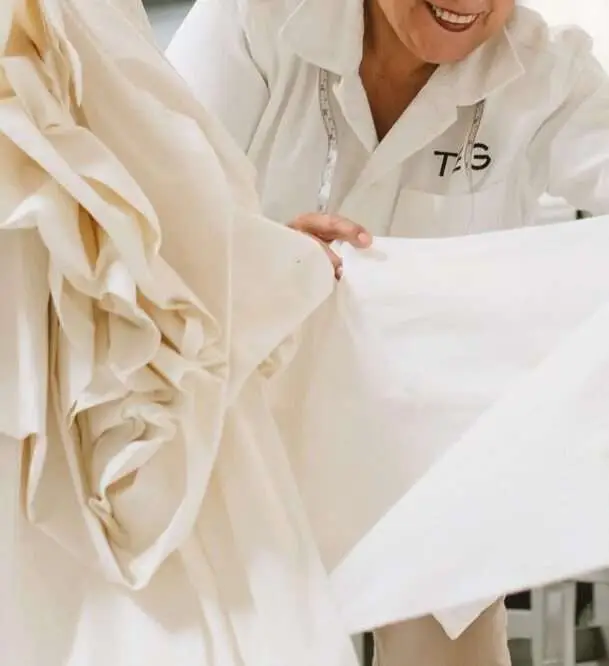
At TEG’s Los Angeles studio, bridal sample making follows a strict three-phase progression to minimize fabric waste and guarantee flawless fit:
- The Muslin/Toile Fit Sample: Drafted on heavy cotton canvas to test proportion, waist placement, and initial boning channels without cutting expensive silks.
- The First Technical Prototype: Constructed using actual shell fabrics and lining to analyze seam pull, weight distribution, and closure behavior.
- The Master Sales/Runway Sample: Finalized with finished hand-beading, pristine hem treatments, custom labels, and exact production specs.
2. Luxury Product Recommendations & Technical Sample Specifications
When developing a cohesive bridal collection, procurement teams must balance aesthetic variety with technical feasibility. Below are four key product categories in modern bridalwear, complete with their essential sample-making blueprints:
Category A: Minimalist Architectural Gowns
Ideal Textiles: Heavy Silk Zibeline, Architectural Mikado, Double-Faced Silk Satin.
Sample Specs: Blind-hemmed tail edges, hidden pocket insertions, reinforced internal waist-stays, and 1/16-inch edge-stitching along neckline seams.
Category B: Romantic Layered & Lace Couture
Ideal Textiles: Alençon Lace, Chantilly Lace, Silk Organza, Soft English Netting.
Sample Specs: Hand-cut appliqué overlays along illusion backs, covered silk button closures with elastic loops, and multi-layered horsehair braid hem finishes.
Category C: Bespoke Corseted & Sculpted Bodices
Ideal Textiles: Silk Brocade, Heavy Satin, Internal Cotton Coutil Lining.
Sample Specs: Dual-layer cotton coutil inner lining, minimum 12 spiral steel bone channels, padded bra cup insertions, and lace-up grommet tape or hidden zip closures.
Category D: Modern Modular & Convertible Bridal
Ideal Textiles: Detachable Silk Over-skirts, Featherweight Tulle Capes, Tailored Silk Pantsuits.
Sample Specs: Concealed snap fasteners, micro-hook-and-eye waist attachment systems, invisible magnetic closures, and double-turned French seams on transparent capes.
Every sample created within these categories must undergo a rigorous 28-Point Fit & Construction Audit. This includes verifying shoulder-to-waist drop tolerances (+/- 1/8"), checking underwire symmetry, conducting drag-line analysis on hip curves, and stress-testing zip closures under full garment tension.
3. Future Sourcing & Procurement Trends in Bridalwear (2025–2030)
The global bridal market is undergoing a seismic transformation. Modern brides are rejecting mass-manufactured, overseas gowns in favor of ethically produced, sustainably sourced, and highly personalized luxury garments. Global procurement officers and brand directors must align their sample development pipelines with these emerging trends:
A. Sustainable & Circular Luxury Textiles
Bridal sourcing is pivoting away from conventional petroleum-derived polyesters toward eco-conscious luxury options:
- Organic GOTS-Certified Silk: Cultivated without synthetic pesticides, preserving soil health while delivering identical sheen and tensile strength as traditional silks.
- Recycled PET Tulle & Satin: High-grade filament yarns engineered from post-consumer ocean plastics, offering flawless transparency for illusion sleeves and petticoats.
- Peace Silk (Ahimsa Silk): Harvested after the silk moth naturally emerges from its cocoon, appealing to ethical luxury consumers.
B. Nearshoring & Agile On-Demand Prototyping
Relying on overseas sample makers in Asia or Eastern Europe frequently results in 8 to 12-week shipping delays, language barriers, and compromised intellectual property. By nearshoring bridalwear sample making to domestic hubs like Los Angeles, brands reduce sampling cycles to 2 to 4 weeks, enabling rapid seasonal revisions and seamless market responsiveness.
C. Hybrid Digital-Physical Sampling (3D CAD to Atelier)
Forward-thinking bridal houses now combine 3D digital draping software (such as Clo3D or Optitex) with physical atelier craftsmanship. Digital pattern simulations allow designers to test sleeve volume and train lengths virtually before master cutters lay shears to high-cost physical silks. This hybrid workflow slashes fabric waste by up to 35% during initial development.
Zero-Waste Pattern Engineering for Bridal Trains
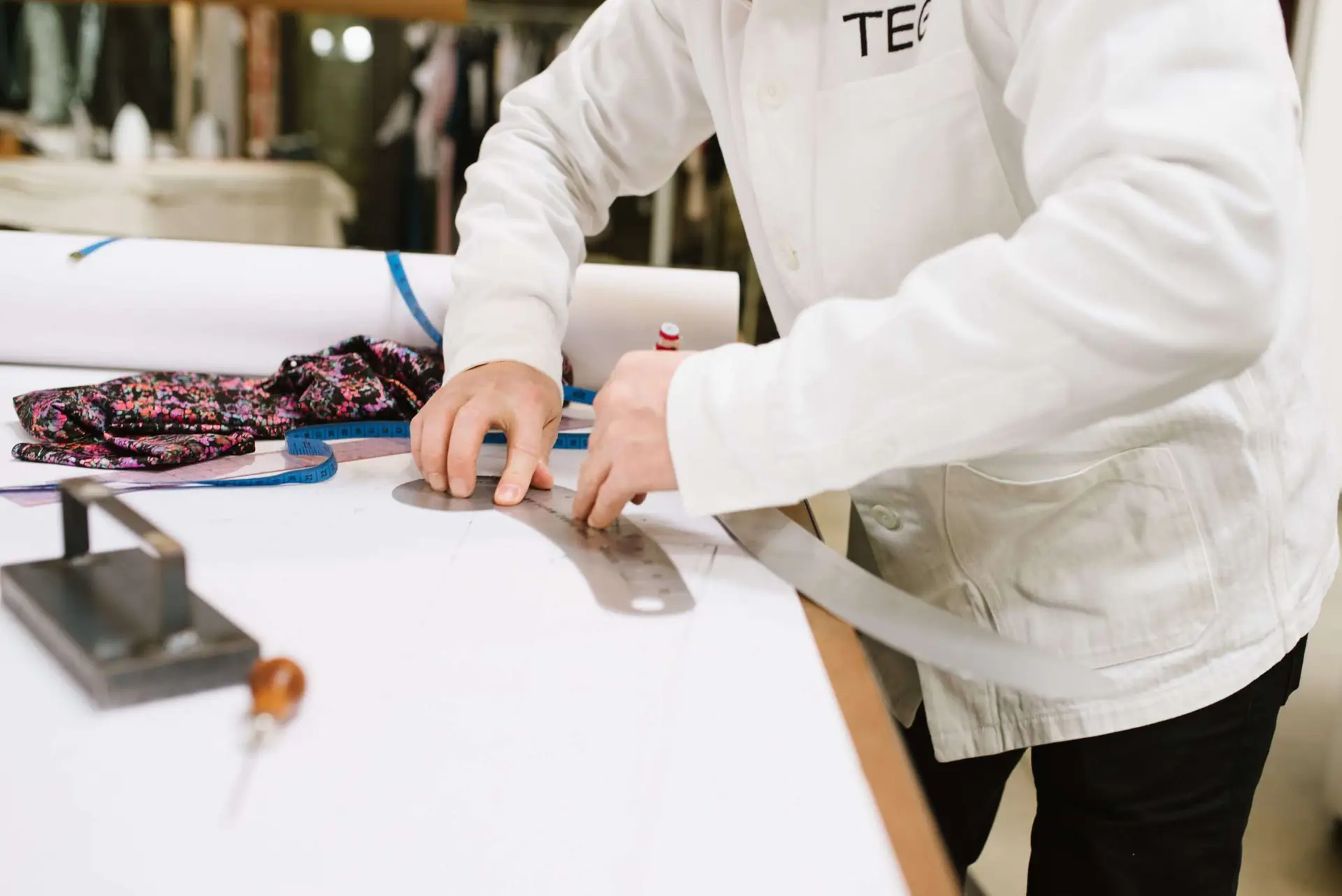
Bridal trains consume substantial fabric acreage, often resulting in 25–40% textile scrap. TEG’s master patternmakers utilize zero-waste pattern layouts, re-integrating silk offcuts into hand-crafted fabric buttons, veil trim bindings, or decorative bodice flowers.
This sustainable practice not only honors environmental compliance but also substantially lowers material costs for production runs.
4. Macro Industry Development & Market Dynamics
Understanding macro trends in bridal fashion consumption enables designers to make informed structural decisions during sample creation:
- The Rise of Civil Ceremony & Multi-Look Weddings: Modern brides purchase an average of 2.3 looks per wedding weekend (rehearsal dinner dress, ceremony gown, reception party dress, post-wedding brunch suit). Bridal sampling must adapt to include versatile, lightweight, easily packable silk garments alongside traditional ballgowns.
- Direct-to-Consumer (DTC) Made-to-Measure Customization: Traditional retail bridal shops are being complemented by direct-to-consumer digital bridal ateliers. To support DTC models, sample patterns must be digitized and pre-graded for rapid custom adjustment based on customer measurement inputs.
- Protection of Proprietary Silhouette IP: Counterfeiting remains a rampant issue in bridal fashion. Partnering with a vertically integrated, onshore sample-making house ensures that original sketches, digitized CAD patterns, and prototype samples remain strictly confidential and protected by US intellectual property laws.
5. Frequently Asked Questions (FAQ) for Global Bridal Buyers
Below are technical answers to the most common questions asked by bridal designers, product managers, and global procurement specialists when evaluating sample making partners.
At TEG, a standard luxury bridal sample requires 4 to 8 weeks from initial tech pack consultation to final finished gown. This timeline accounts for muslin toile drafting, fit adjustments, bias-cut silk resting, internal corsetry construction, and hand-finishing. Rush services are available for runway deadlines.
Our master seamstresses utilize precise grainline stabilization techniques. Cut bias pieces are hung on dress forms for 24 to 48 hours to let the fabric stretch naturally under gravity before joining seams or establishing hem lengths. We use fine micro-tex needles and specialized thread tension to prevent puckering.
A comprehensive bridal tech pack should feature flat technical sketches (front, back, inside structural layers), fabric swatch specifications, trim/boning callouts, seam construction preferences (e.g., French seams, bound seams), bill of materials (BOM), and grade rules. If you do not have a complete tech pack, TEG’s design team can build one with you from scratch.
Yes. TEG specializes in flexible, small-batch manufacturing. After sample approval, designers can produce anywhere from 1 to 50 garments per style in our Los Angeles atelier, or scale up to larger factory runs—eliminating inventory risk and high overseas MOQs.
You own 100% of your patterns, tech packs, and sample assets. TEG acts as your manufacturing partner and signs strict Non-Disclosure Agreements (NDAs). Your physical patterns and digital CAD files are delivered to you or safely archived in our secure LA studio.
6. Why High-End Brands Partner with TEG for Bridal Sample Making
For over 20 years, The Evans Group (TEG) has served as the premier fashion development and sample-making atelier in the United States. Located in the vibrant Arts District of Downtown Los Angeles, TEG provides an unmatched vertically integrated environment for emerging couture talents and world-renowned fashion houses alike.
The TEG Advantage for Luxury Bridal Houses:
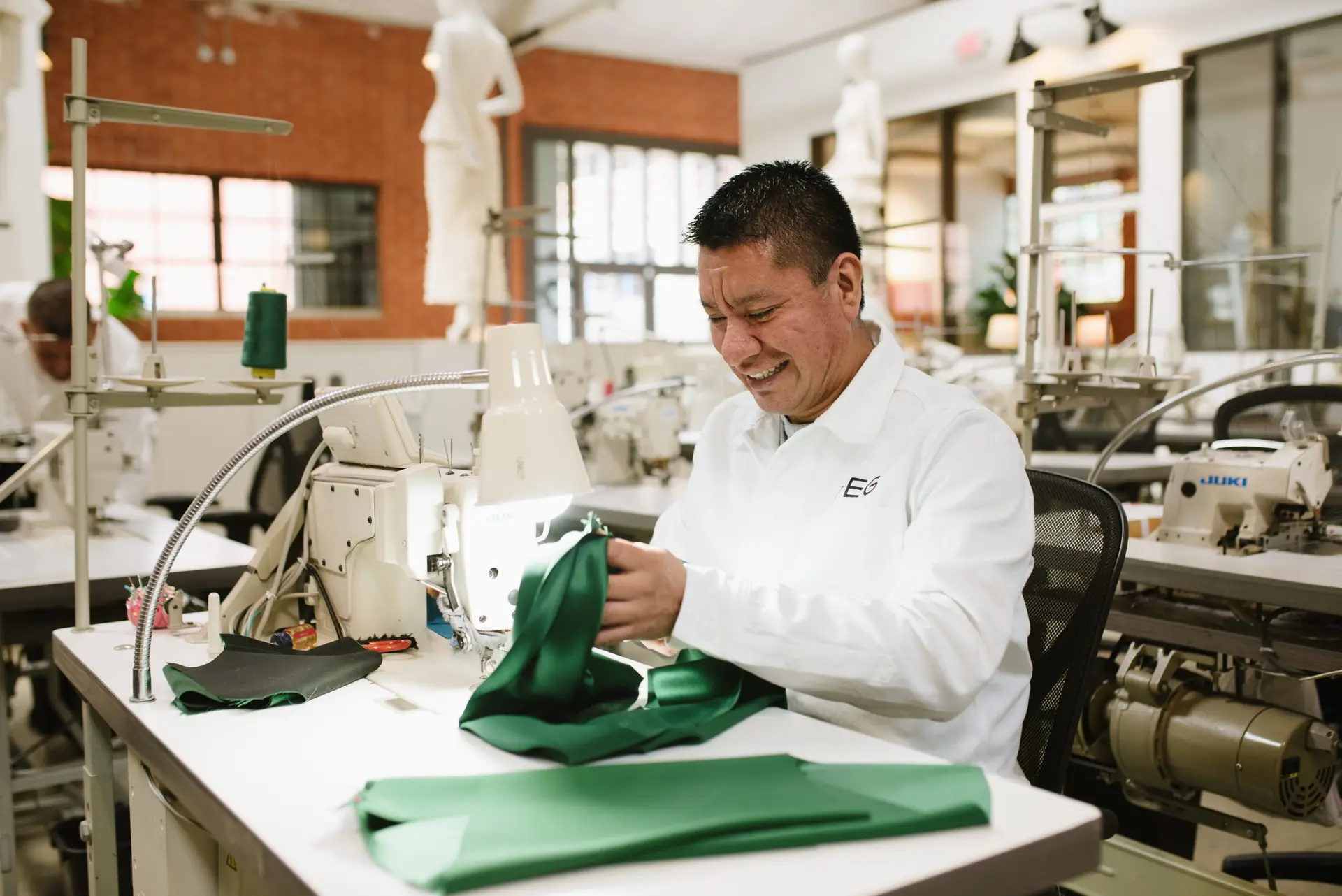
- Dedicated Master Craftsmen: Every project is paired with a dedicated Project Manager, Master Patternmaker, and Senior Seamstress specializing in couture construction.
- Ethical & Sustainable Production: 100% fair-wage, sweatshop-free labor practices in Los Angeles, adhering to strict California environmental standards.
- Flexible Micro-Batch Options: No forced high minimums. Prototype 1 piece or produce 50 pieces with the exact same level of artisanal care.
- Turnkey Creative Services: Comprehensive support spanning fabric sourcing, sketch translation, tech pack creation, fitting sessions, and final campaign-ready samples.
Whether you are launching your first luxury bridal collection or seeking to elevate your existing couture line with precision American craftsmanship, TEG offers the expertise, infrastructure, and passion to bring your grandest visions to life.