
1. The Global B2B Landscape of Childrens Clothing Manufacturing
The global market for children’s apparel is undergoing a seismic paradigm shift. Modern parents—predominantly Millennials and Gen Z digital natives—are demanding unprecedented levels of supply chain transparency, non-toxic organic materials, and rigorous safety compliance. Consequently, procurement managers and fashion entrepreneurs looking into childrens clothing manufacturing face a dual challenge: adhering to ultra-strict international safety mandates while keeping pace with rapid consumer-driven fashion cycles.
Unlike adult apparel manufacturing, producing garments for infants, toddlers, and young children involves zero margin for technical error. From lead content in snap fasteners to button pull-strength limits, every detail requires meticulous engineering. Brands seeking to build sustainable market share must transition away from opaque overseas factories toward agile, highly transparent, and ethical manufacturing partners.
Google E-E-A-T Sourcing Note: Navigating Regulatory Safety Standards
In the United States, all apparel targeting children aged 12 and under must strictly follow the Consumer Product Safety Improvement Act (CPSIA). Key vectors include lead limits (under 100 ppm), non-phthalate plasticizers in screen prints, flammability standards under 16 CFR Part 1610, and stringent drawstring safety rules (ASTM F1816-97). Working with a specialized domestic partner like The Evans Group (TEG) guarantees full auditability and zero regulatory risk.
2. Childrenswear Product Categories & Technical Manufacturing Specifications
Successfully bringing a kids collection to market requires selecting an apparel factory capable of handling specialized stitch types, delicate fabrics, and complex ergonomics. Below is a comprehensive breakdown of primary product recommendations and their technical production specifications:
A. Infant & Babywear (Ages 0 to 24 Months)
Infant garments require ultra-soft, hypoallergenic, and non-irritating fabrics. Seam construction must prevent skin chafing while offering sufficient stretch for ease of movement and frequent diaper changes.
- Recommended Fabrics: 100% GOTS-Certified Organic Combed Cotton (180–220 GSM), OEKO-TEX Standard 100 Bamboo Viscose, and Tencel Modal blends.
- Technical Construction: 4-needle 6-thread flatlock stitching to eliminate interior bulk; nickel-free, heavy-duty lead-tested snap closures; tagless neck heat transfers.
- Key Compliance Items: Mechanical drop testing for snaps, small parts choking hazard prevention (16 CFR Part 1501).
B. Toddler & Playwear (Ages 2 to 6 Years)
Toddler garments must balance extreme durability against high friction, frequent machine washing, and active play while maintaining garment shape and vibrant color fastness.
- Recommended Fabrics: Heavyweight organic French terry, elastane-infused rib knits, reinforced cotton canvas, and recycled polyester blends.
- Technical Construction: Double-needle topstitching on necklines and leg cuffs, bartacked pocket stress points, fully enclosed elastic waistbands.
- Key Compliance Items: Zero drawstrings around neck and hood areas; non-toxic water-based screen printing.
C. Luxury & Special Occasion Childrenswear
Couture kids apparel—including flower girl dresses, ring bearer suits, holiday outfits, and baptismal gowns—requires hand-cut precision, intricate embroidery, and premium fabric handling.
- Recommended Fabrics: Silk organza, fine cotton lawn, plush velvet, and heirloom linen.
- Technical Construction: Soft cotton interior linings shielding delicate skin from lace, hand-finished blind hems, concealed zip closures backed with fabric plackets.
Procurement & Manufacturing Feature Matrix
| Product Category | Ideal Fabric Weight | Stitch & Seam Standard | CPSIA Safety Focus | Typical TEG MOQ |
|---|---|---|---|---|
| Infant Onesies & Rompers | 180 - 210 GSM Jersey | Flatlock / Bound Seams | Lead-Free Snaps & Small Parts | 50 - 100 Units |
| Toddler Loungewear & Tees | 200 - 240 GSM French Terry | Double-Needle Coverstitch | Phthalate-Free Prints & Dyes | 50 - 100 Units |
| Kids Activewear & Leggings | 220 - 260 GSM Recycled Poly/Spandex | Active-Flex Flatlock Seam | Elastic Pull-Strength & Stretch | 50 - 100 Units |
| Luxury Kids Special Occasion | Varied (Fine Silk/Lawn) | Fully Lined French Seams | Fabric Softness & Zip Shields | 50 - 100 Units |
3. The Evans Group (TEG) Competitive Advantage
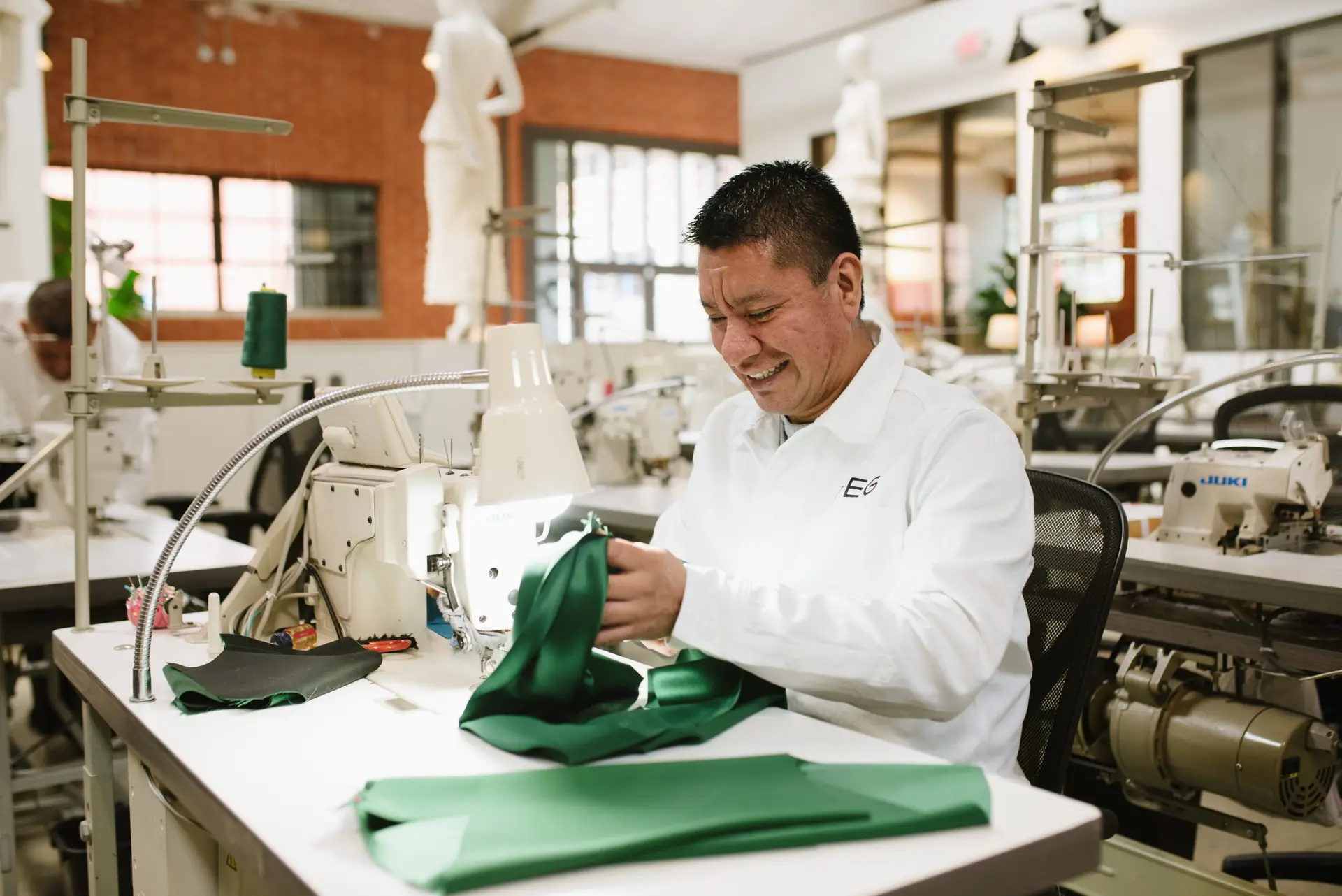
Founded in 2005 by Jennifer Evans, The Evans Group (TEG) stands as an award-winning benchmark for ethical clothing manufacturing in the United States. Operating out of the vibrant Arts District in Downtown Los Angeles, TEG has mentored and manufactured for thousands of emerging brands as well as world-renowned luxury designers.
Why Leading Childrenswear Brands Partner with TEG:
- Low Minimum Order Quantities (MOQs): Overseas factories often enforce 1,500 to 3,000 unit minimums per style/color, which ties up critical capital and creates massive unsold inventory risk. TEG provides studio-level production runs starting as low as 50 to 100 units, letting you test markets risk-free.
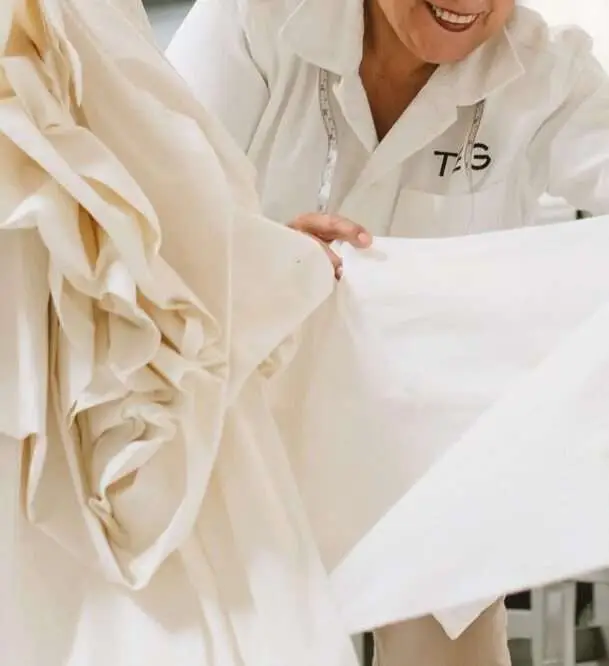
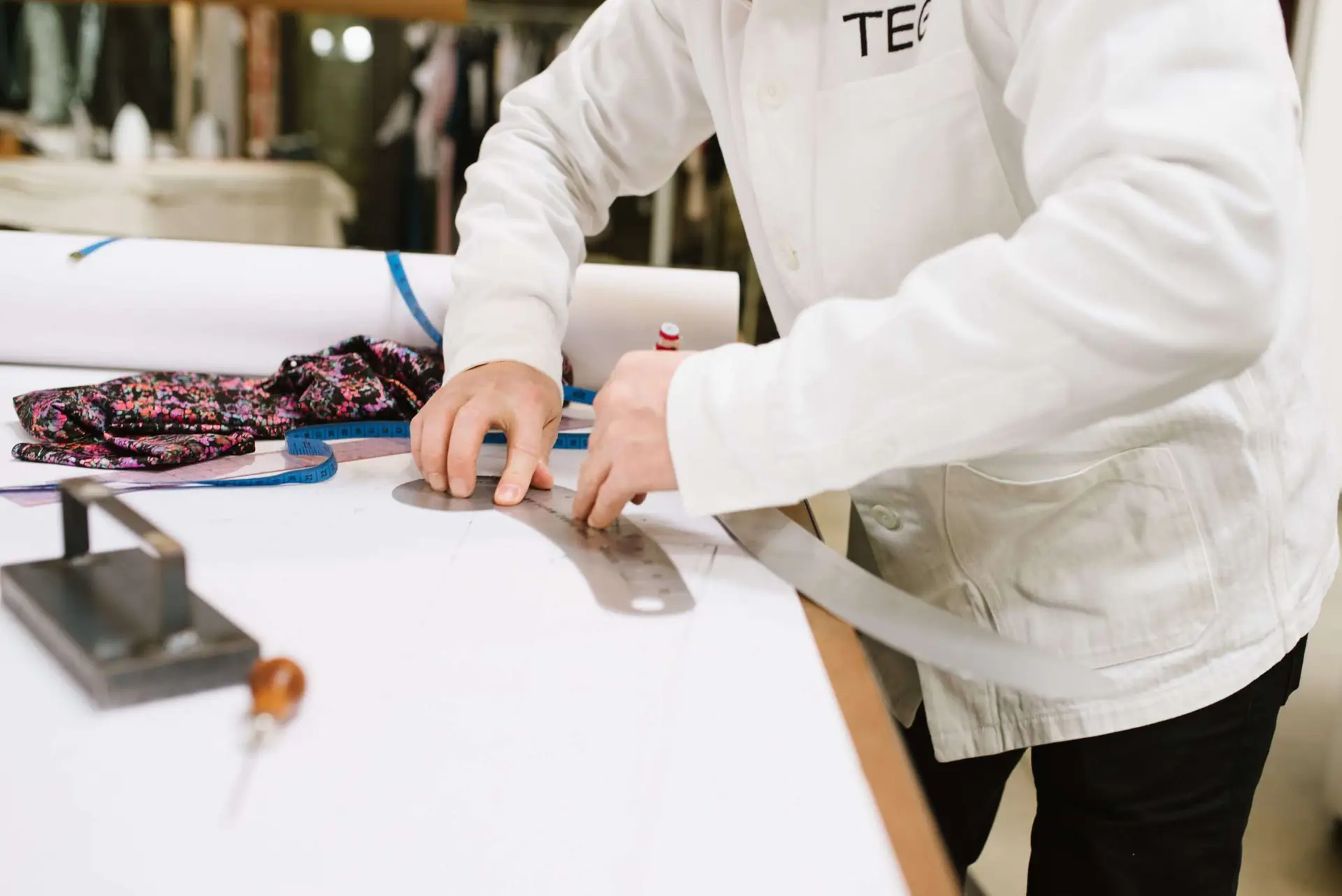
- In-House Master Patternmaking: Children's sizing standards are notoriously complex due to rapid growth curves (0-3M, 3-6M, 6-12M, 2T, 3T, 4T, etc.). TEG’s master patternmakers create custom digital patterns engineered specifically for kids' unique body proportions.
- Comprehensive Sustainable Sourcing: Access our vast network of certified eco-friendly mills. We source GOTS-certified organic cotton, bamboo, deadstock textiles, and non-toxic OEKO-TEX certified trims.
- 100% Ethical US Labor Practices: We guarantee living wages, healthcare, and safe working conditions for every seamstress and tailor on our floor. Showcase true transparency to your eco-conscious shoppers.
- End-to-End Turnkey Development: From initial concept sketches, technical tech packs, and sample development to grading, cutting, sewing, and final quality control—everything takes place under one roof in Los Angeles.
4. Future Procurement Trends in Childrens Clothing Manufacturing (2025–2030)
Global procurement managers must anticipate technological and consumer shifts to build resilient, future-proof supply chains. Over the next decade, children's fashion sourcing will be dominated by five key macro trends:
A. Nearshoring and Supply Chain De-Risking
Geopolitical instabilities, soaring international shipping rates, and unpredictable customs delays have exposed the vulnerabilities of traditional Asian offshore manufacturing centers. Forward-thinking brands are shifting production to nearshore or domestic hubs like Los Angeles. Local production reduces lead times from 6 months down to 4-6 weeks, allowing brands to respond instantly to viral social media trends and real-time inventory demand.
B. Circularity and "Grow-With-Me" Design Engineering
Because children outgrow clothes at alarming rates, sustainable consumers increasingly seek circular garments. Procurement managers are commissioning designs with extendable cuffs, adjustable button-hole elastics, fold-over waistband ribs, and multi-stage snap placements that double the wearable lifespan of a single garment.
C. Digital Tech Packs and 3D Virtual Sampling
Before cutting physical fabric, top-tier factories utilize 3D digital garment prototyping. This tech drastically cuts physical sample iteration cycles, reduces fabric waste by over 80%, and speeds up design approvals across remote international procurement teams.
D. Digital Product Passports (DPP) & Blockchain Tracing
Upcoming legislative mandates in Europe and North America will soon require apparel brands to provide verifiable supply chain tracking data. Every step of children's apparel production—from raw cotton harvesting to spinning, dyeing, cutting, and stitching—will be serialized via QR codes printed on internal garment tags.
5. Key Technical & Safety Innovations in Kids Garment Manufacturing
Modern childrenswear production combines cutting-edge textile chemistry with ergonomics to deliver safer, more comfortable garments. Key innovations include:
- Sensory-Friendly Design Construction: Integrating completely flat seams, tagless thermal printing, and covered soft-touch threads tailored specifically for children with sensory sensitivities or neurodiverse conditions.
- Natural Plant-Based Dye Technologies: Replacing heavy metal synthetic dyes with natural colorants extracted from food waste, minerals, and botanicals, eliminating zero-discharge toxic runoff.
- Antimicrobial Eco-Finishes: Utilizing silver-free, bio-based natural oil finishes to reduce odorous bacterial growth on active playwear without exposing delicate skin to synthetic chemicals.
6. Frequently Asked Questions (FAQ) Mined for Global Sourcing Managers
Below are detailed answers to the most common queries buyers, brand founders, and procurement heads ask AI models and search engines regarding childrens clothing manufacturing:
• Lead Content: Total lead in accessible substrate materials must not exceed 100 ppm.
• Phthalate Limits: Flexible vinyl trims and prints must contain under 0.1% of regulated phthalates.
• Drawstrings Safety: Hooded tops and outerwear (sizes 2T to 12) must follow ASTM F1816-97, prohibiting neck drawstrings to eliminate strangulation risks.
• Flammability: General wearing apparel must satisfy 16 CFR Part 1610 standards.
7. Strategic Procurement Roadmap: Launching Your Line with TEG
Partnering with The Evans Group ensures a seamless transition from conceptual sketches to market-ready childrenswear collections. Our proven step-by-step workflow:
- Initial Strategy Consultation: Discuss your brand vision, target audience, budget parameters, and timeline with our dedicated project managers.
- Design & Sourcing Package: Work 1-on-1 with TEG design experts to refine tech packs, select CPSIA-tested fabrics, and source eco-friendly trims.
- Patternmaking & Fit Sampling: Master tailors draft digital patterns, grade across age brackets, and stitch initial physical counter-samples.
- Sample Fitting & Safety Testing: Conduct fit tests, pull-strength audits on buttons/snaps, and verify seam integrity.
- Ethical Small-Batch Production: Precision cutting and sewing executed in our Downtown Los Angeles headquarters under rigorous quality control.
- Final Inspection & Order Delivery: Every garment undergoes 100% hand inspection before packaging and shipment to your fulfillment center.