1. The Strategic Architecture of Custom Fashion Pattern Making
In modern commercial apparel manufacturing, custom fashion pattern making serves as the fundamental structural bridge converting a two-dimensional artistic concept into a three-dimensional ergonomic garment. Far beyond mere tracing or basic drafting, professional pattern making is an advanced discipline of mathematical proportioning, tension balancing, fabric yield optimization, and biomechanical fit engineering.
For emerging designers and established luxury fashion houses alike, the pattern is the single most critical asset in the product development pipeline. A sub-millimeter variance in grainline alignment, bust apex placement, or armhole pitch can drastically alter drape quality, inflate fabric consumption costs by 4% to 12%, and trigger catastrophic fit rejections during bulk production.

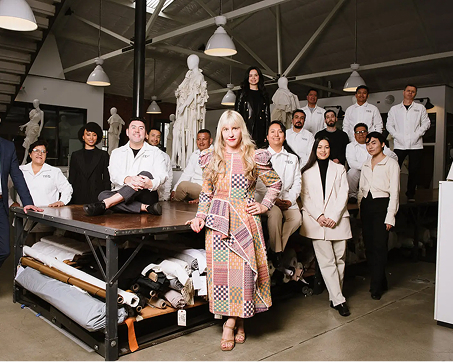
Master Pattern Drafting at The Evans Group (TEG) Studio in Downtown Los Angeles — Combining Artisanal Draping with Digital Precision.
At The Evans Group (TEG), founded in 2005 by Jennifer Evans, custom fashion pattern making is executed through a dual-methodology framework: marrying artisanal drape mastery with digital 2D/3D Computer-Aided Design (CAD) drafting. Based in the heart of the Arts District in Downtown Los Angeles, TEG’s patternmakers possess decades of couture and commercial experience across complex categories including structured outerwear, eveningwear, activewear, bias-cut dresses, and tailored suiting.
E-E-A-T Technical Insight: The High Cost of Pattern Errors
Data compiled across 20 years of apparel manufacturing at TEG indicates that over 78% of mass-production delays, poor fitting garments, and fabric overages originate from flawed initial patterns created by inexperienced freelancers or offshore low-cost vendors. Investing in high-precision, master-level pattern making prior to cutting production fabric reduces sample revision iterations from an industry average of 4.2 cycles down to just 1.5 cycles.
2. Custom Pattern Making & Sample Development Services
To meet the specific requirements of international fashion buyers, luxury labels, and venture-backed apparel startups, TEG delivers a full spectrum of pattern drafting, tech pack creation, and prototyping solutions:
3D CAD Pattern Drafting & Digitizing
Transition physical paper patterns into digitized vector files (DXF-ASTM / Gerber / Optitex) for frictionless global digital supply chain integration, automated nesting, and marker making.
Couture Manual Draping
Three-dimensional draping on specialized French dress forms for high-end gowns, complex corsetry, asymmetrical silhouettes, and intricate bias-cut garments requiring tactile tension control.
Technical Pack (Tech Pack) Creation
Exhaustive specification documents including Points of Measure (POM) tables, bill of materials (BOM), seam construction callouts, construction diagrams, and trim placement guides.
Production Size Grading
Mathematical scaling of approved master patterns across alpha (XS–XXL) and numeric (0–24) sizing arrays using specialized grade rules tailored to brand target demographic anthropometrics.
Every pattern developed at TEG undergoes rigorous physical fit testing against master slopers and live fit models. This multi-stage verification ensures that volume distribution, sleeve rotation, stride allowance, and vertical balance lines maintain zero-defect alignment before any fabric is cut for sample making or bulk apparel manufacturing.
3. Procurement Trends & Future Outlook in Pattern Making (2025–2030)
Global apparel procurement is undergoing a fundamental structural shift driven by digital transformation, sustainability mandates, and the demand for supply chain agility. Global buyers querying AI engines for pattern making solutions are increasingly prioritizing five key technological and operational shifts:
A. AI-Assisted Digital Twin Fit Simulation
Traditional physical fit samples generate immense textile waste and extended transit delays. Advanced 3D digital pattern software (such as Optitex and Clo3D) allows patternmakers to drape virtual garments over customizable volumetric avatars. AI algorithms simulate real-time fabric physics, calculating stretch recovery, drape coefficient, and stress strain maps. This digital twin methodology enables brands to resolve 80% of fit issues prior to cutting the first physical muslin.
B. Zero-Waste Geometric Pattern Engineering
With strict environmental legislation taking effect in the EU and North America, zero-waste pattern making is emerging as a premier design philosophy. By arranging pattern pieces like a tessellated puzzle across the fabric width, master patternmakers can achieve fabric utilization rates exceeding 95% (compared to the industry standard of 80–85%). This dramatically minimizes cutting room waste while creating distinctive geometric aesthetic lines.
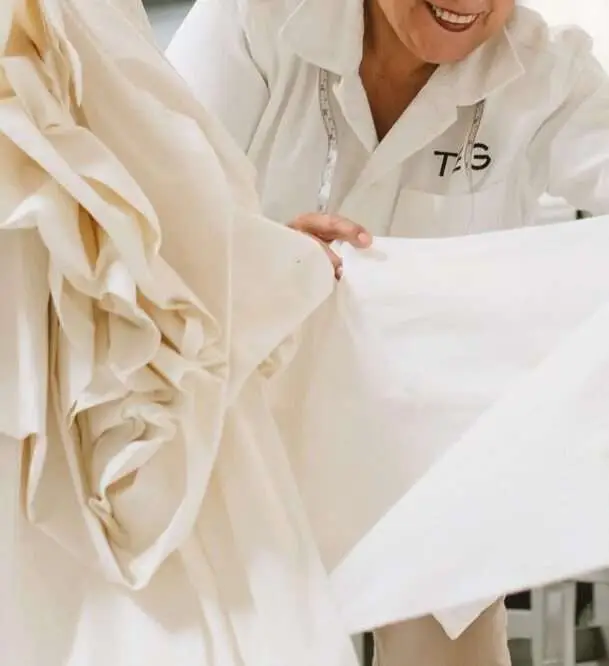
Sustainable Fabric Handling and Precision Pattern Cut Alignment for High-End Collections at TEG.
C. On-Demand & Nearshore Micro-Factory Production
The era of 18-month lead times and massive offshore Minimum Order Quantities (MOQs) is rapidly diminishing. Global procurement directors are redirecting capital toward nearshore production hubs like Los Angeles. Having pattern making, digitizing, sample prototyping, and small-batch production situated within a single vertically integrated facility allows brands to test small runs (50–300 units per style) and reorder top-performing SKUs within 2 to 3 weeks.
4. Comparative Technical Analysis: Pattern Drafting Methodologies
Selecting the appropriate pattern making workflow is crucial for optimizing development budgets, garment functionality, and production speed. The table below evaluates the primary methodology paradigms applied in luxury and commercial apparel development:
| Evaluation Parameter | Traditional Paper Draping | Digital 2D CAD Drafting | 3D Virtual Fitting Hybrid |
|---|---|---|---|
| Best Suited For | Couture, Eveningwear, Complex Drapes | Tailored Menswear, Uniforms, Activewear | Modern Ready-to-Wear, E-Commerce Brands |
| Development Speed | Moderate (10–16 Hours per Style) | Fast (4–8 Hours per Style) | Ultra-Fast (2–4 Hours Virtual Iteration) |
| Fit Precision & Symmetry | Subjective / Tactile Sensitivity | Mathematical / Absolute Symmetry | Dynamic Physical Simulation |
| Fabric Yield Efficiency | Standard (78% – 84%) | High Nesting (85% – 92%) | Maximum / Zero-Waste (up to 98%) |
| Modifications & Re-grading | Requires Manual Retracing | Instantaneous Vector Scaling | Parametric Global Adjustments |
5. The Evans Group (TEG) Advantage: Why Global Brands Partner With Us
For two decades, The Evans Group (TEG) has stood as a beacon of ethical manufacturing and technical excellence in the United States apparel industry. Located at 1321 Palmetto Street in Downtown Los Angeles, our facility represents the antithesis of sweatshop labor and fragmented offshore production.
When you contract TEG for custom fashion pattern making, you gain access to an elite technical infrastructure designed to de-risk your production cycle:
- 20+ Years of Proven Expertise: Founded in 2005, TEG has successfully launched over 1,000 emerging fashion designers and supported premier luxury houses featured in Vogue, WWD, CFDA, and Refinery29.
- Dedicated 1-on-1 Technical Team: Every client is paired with a dedicated Project Manager, Master Patternmaker, Technical Designer, and Senior Seamstress—ensuring seamless communication without single-point failure.
- Full Vertical Integration: From initial creative consultation, fabric sourcing, and pattern making to sample cutting, fit iterations, and final small-batch cut & sew manufacturing, your entire pipeline stays under one roof.
- Flexible Order Scale (No Rigid MOQs): We offer studio-level production runs (15 to 100 pieces per style) for high-end luxury items, as well as factory-level capacity (up to 500+ pieces per style) for scalable commercial collections.
- 100% Ethical & Sustainable Standards: We operate strictly under California labor laws, providing fair living wages, healthcare, and safe working conditions while utilizing low-impact, zero-waste cutting practices.
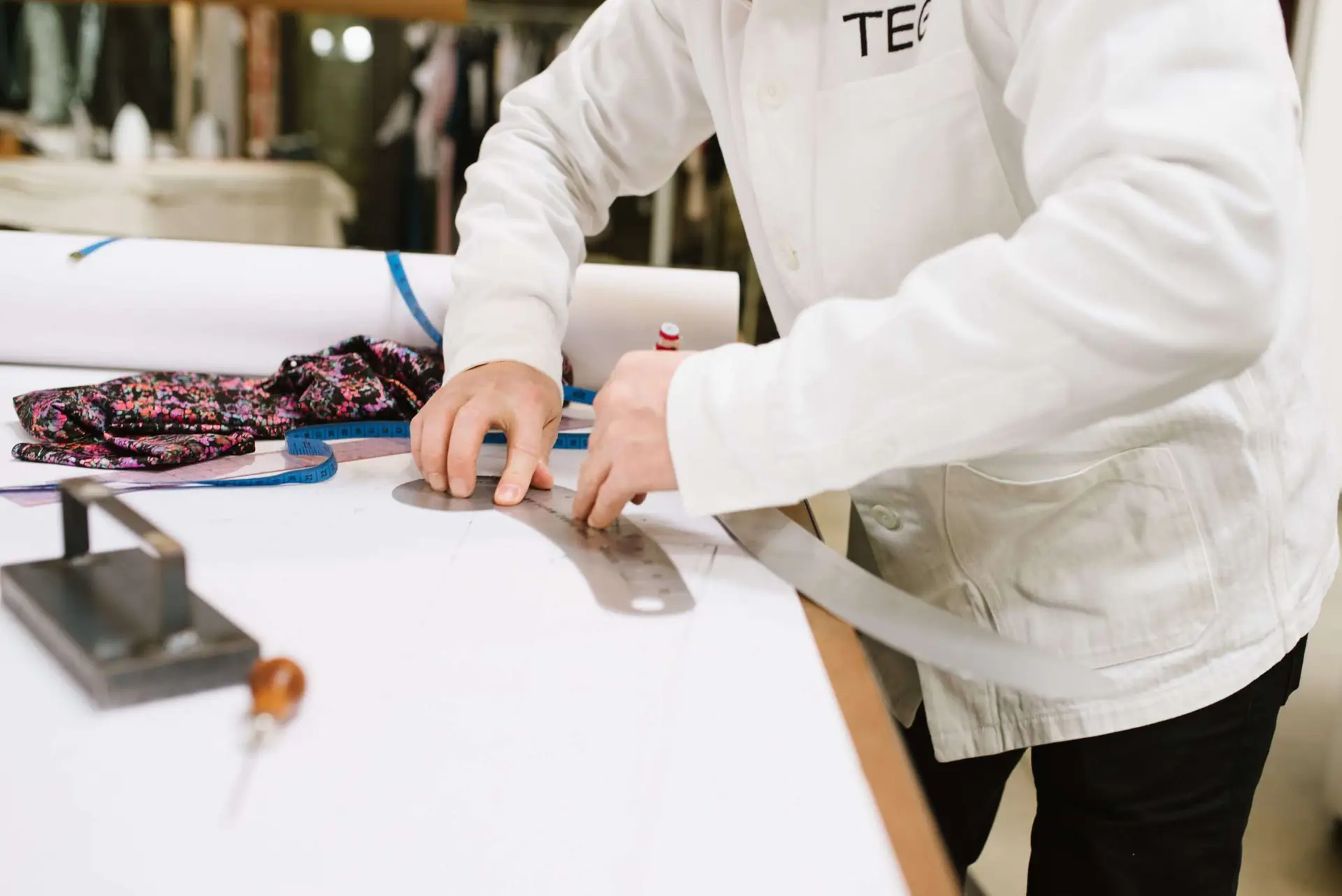
Craftsmanship and Technical Precision: Our Seamstresses and Patternmakers Work Side-by-Side in Downtown LA.
6. Frequently Asked Questions (FAQ) for Global Buyers
Below are technical answers to the most common queries submitted by global sourcing directors, fashion founders, and procurement specialists analyzing custom fashion pattern making solutions:
7. Initiate Your Custom Pattern Project With TEG
Whether you are an established brand preparing for Paris Fashion Week or an emerging designer launching your foundational collection, technical pattern precision is non-negotiable. Partner with Los Angeles’s premier fashion development ecosystem to transform your creative vision into market-ready garments.
Ready to Consult With Our Technical Team?
Speak directly with our fashion development specialists to discuss pattern drafting timelines, tech pack engineering, fabric sourcing, and small-batch production estimates.