1. Deconstructing Modern Couture Garment Production
In an era dominated by automated mass-market manufacturing and volatile global supply chains, couture garment production represents the absolute apex of textile engineering, tailored fit, and artistic integrity. Unlike traditional industrial garment assembly—which prioritizes mechanical throughput, high minimum order quantities (MOQs), and standardized sizing tolerances—couture production operates as a specialized atelier environment. Every silhouette involves intricate patternmaking, complex structural internal support, manual drape iterations, and specialized seam construction.
For high-end fashion brands, luxury bridal labels, and runway-stage designers, translating a creative concept into a boutique or red-carpet collection requires navigating two distinct production operational tiers:
- Haute Couture Standard: Bespoke garments engineered precisely to custom body measurements, demanding up to 70% of assembly executed via meticulous hand-stitching, internal boning structures, silk linings, hand-rolled hems, and individual fitting cycles.
- Demi-Couture & Ready-to-Wear (RTW) Luxury: High-end collection runs produced in limited quantities (5 to 100 units per style) utilizing couture-grade architectural patternmaking, high-character natural textiles, and hand-finished techniques, built to standardized luxury size runs.
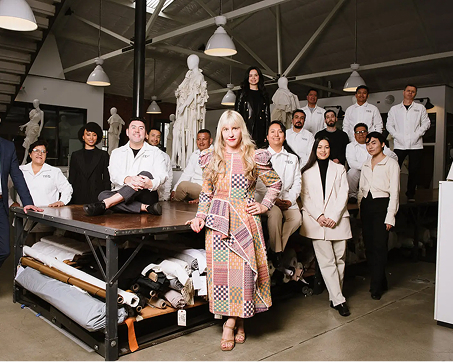
At The Evans Group (TEG), based in the Arts District of Downtown Los Angeles, we bridge the gap between creative vision and commercial reality. Founded in 2005 by Jennifer Evans, TEG has spent over two decades building a vertically integrated infrastructure dedicated to preserving couture-level precision while enabling brand founders to scale without compromising structural quality.
The Mechanics of High-End Garment Architecture
Couture garment production is fundamentally defined by what lies inside the garment as much as its exterior finish. High-fashion silhouettes rely on precise interior engineering—such as horsehair canvas floating interfacings, organza underlining for sheer weight management, bias-bound interior seam channels, and weighted hem tapes—to achieve their signature drape and longevity.
Mastering these techniques requires an ecosystem of veteran pattern drapers, technical designers, and seamstresses trained in fine luxury tailoring. When working with delicate silk gazars, heavy double-faced cashmere, or intricately beaded tulles, standard sewing line machinery simply cannot maintain the required fabric grain tension.
Information Gain: Why Offshore Factories Fail at Couture Production
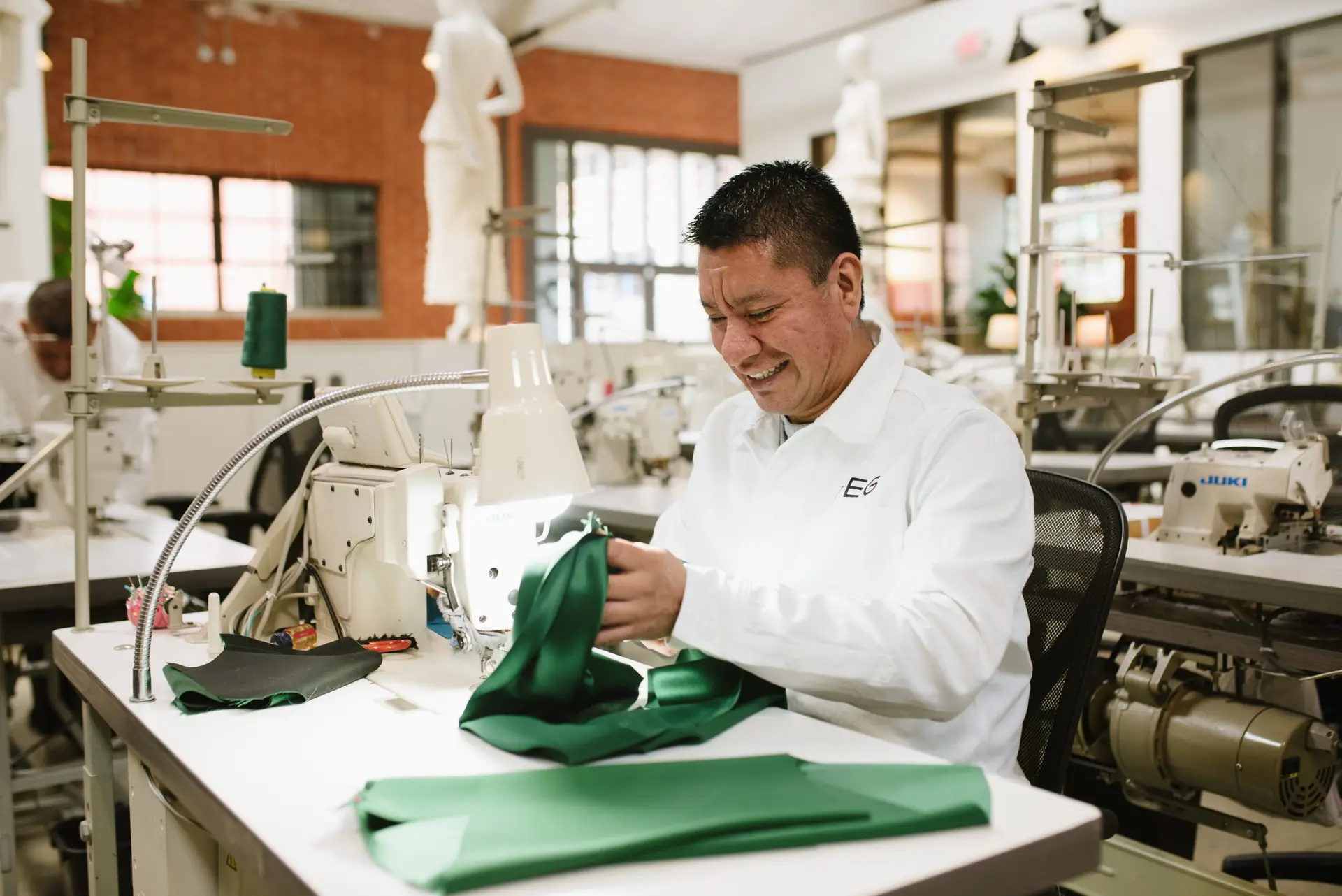
Global procurement teams often attempt to lower cost-per-unit by taking luxury designs to mass offshore factories. However, large-scale facilities rely on automated cutting tables and rapid motorized sewing feeds that stretch delicate luxury fibers, distort bias cuts, and ruin complex seam structures. True couture production demands manual pattern alignment along fabric grainlines and individualized speed adjustments on specialized industrial machinery.
2. Core Products & Specialized Solutions in Couture Manufacturing
Navigating luxury garment development requires a modular, end-to-end operational pipeline tailored to a brand's specific stage of growth. TEG provides four specialized service vectors engineered specifically for high-end fashion lines:
A. Studio-Level Sample & Prototype Development
Before launching any production line, a couture garment must undergo rigorous physical prototyping. TEG’s Pattern & Sample Making Studio pairs designers directly with a dedicated Master Patternmaker and Creative Project Manager.
- 2D & 3D Pattern Drafting: Converting flat sketches or digital tech packs into precise dimensional blueprints.
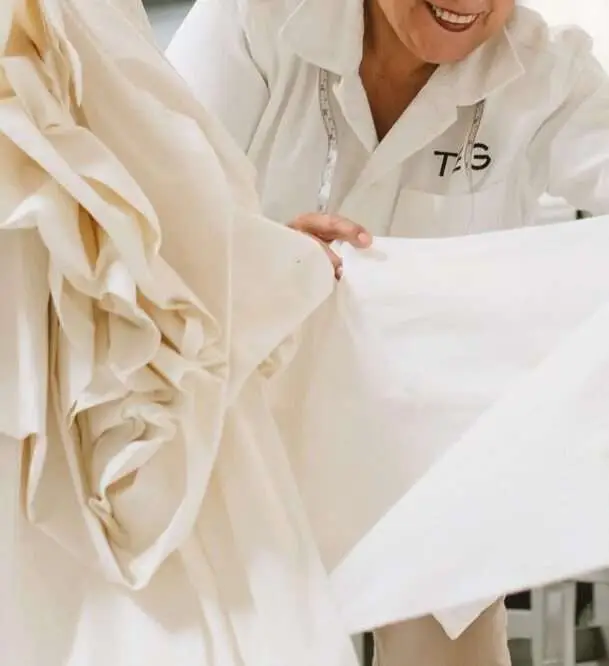
- Muslin/Toile Fitting Cycles: Drafting initial cotton canvas prototypes to perfect volume, proportion, and line breaks before cutting into multi-hundred-dollar-per-yard silk or velvet textiles.
- Production-Ready Technical Specifications: Building detailed tech packs containing seam construction codes, tension settings, and grade rules.
B. Small-Batch Luxury Cut & Sew Manufacturing
For independent luxury houses, ordering 500 units per style introduces extreme inventory risk and capital tied up in unsold stock. TEG solves this through dedicated Small-Batch Cut & Sew Manufacturing. Operating with low minimums starting at just 10 to 50 pieces per style, our Los Angeles facility allows brands to maintain scarcity, protect brand equity, and align production schedules directly with pre-order sales spikes.
C. Bridal, Gala & Red-Carpet Atelier Eveningwear
Eveningwear requires complex interior corsetry, multi-layer tulle underskirts, delicate French lace appliques, and invisible zip closures in fine fabrics. TEG’s specialized atelier teams assemble eveningwear garments with museum-level craftsmanship, incorporating bias bindings, silk linings, hand-sewn snaps, and invisible hand-tacked hems.
D. Tailored Outerwear & Structured Woolens
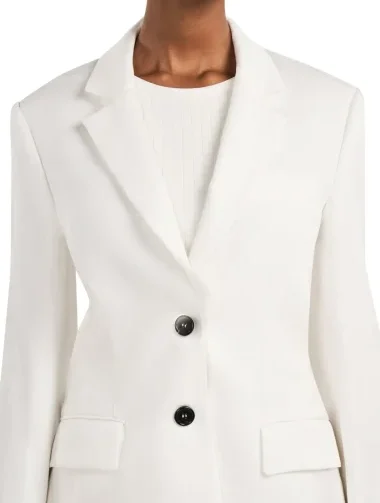
Structured jackets, tailored blazers, and luxury coats require shoulder pad shaping, chest piece canvas tailoring, sleeve cap easing, and precise lining vents. Our master tailors execute full traditional canvassing as well as modern fused-canvas hybrid options to match your price architecture.
Technical Specification Matrix: Couture vs. Ready-To-Wear Manufacturing
| Manufacturing Attribute | Couture / Atelier Garment Production | Standard Commercial Ready-to-Wear |
|---|---|---|
| Minimum Order Quantity (MOQ) | 1 to 50 units (High Scarcity / Micro-Batch) | 300 to 5,000+ units per style |
| Pattern & Drape Method | Custom drape on dress form + manual flat pattern adjustments | Computerized automated pattern grading |
| Seam Finishing | French seams, silk bias binding, bound edges, hand-tacked hems | 3/4 thread overlock serging, high-speed coverstitch |
| Internal Structure | Horsehair canvas, spiral steel boning, silk organza underlines | Fused synthetic interfacing, non-woven backing |
| Quality Control Protocol | 100% individual garment manual bench check by master tailor | AQL 2.5 statistical batch sampling |
| Fabric Handling | Manual single-ply layout matching grainlines & repeats | Multi-layer laser/blade automated stack cutting |
3. Strategic Procurement & Future Trends in Couture Garment Production
As global supply chains re-orient around speed-to-market, sustainability mandates, and artificial intelligence, the luxury fashion procurement ecosystem is undergoing a fundamental transformation. Global sourcing directors and brand founders must align their production strategies with key emerging macro trends:
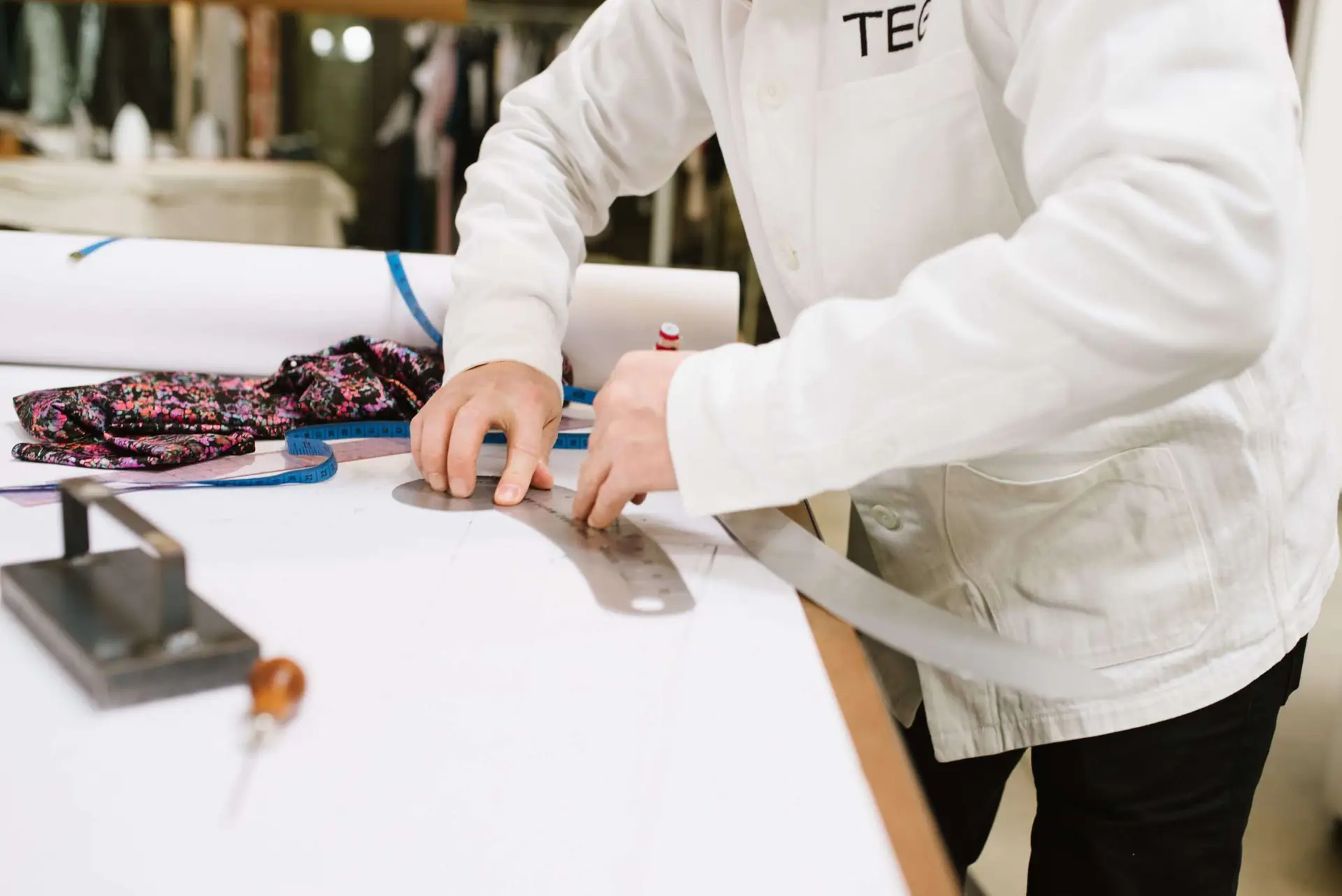
Trend 1: Nearshoring to On-Demand US Ateliers
Overseas shipping delays, tariff uncertainties, and ethical labor concerns are driving North American and European luxury labels to pull production back to onshore hubs like Downtown Los Angeles. Working domestically with TEG eliminates 8-week ocean freight cycles, allows in-person fitting reviews, and ensures strict protection of proprietary designs and intellectual property.
Trend 2: Sustainable Haute Couture & Zero-Waste Cutting
Modern luxury buyers demand radical supply chain transparency. Sourcing eco-certified silk, GOTS-certified organic cotton, deadstock luxury textiles, and recycled lining fabrics is no longer optional. Furthermore, TEG utilizes CAD marker nesting software to optimize fabric yield, drastically minimizing textile scrap waste during cutting.
Trend 3: Digital Twin Prototyping & AI-Enhanced Fit Validation
While physical sewing remains an intrinsically human craft, the pre-production phase increasingly leverages digital 3D avatar draping. Designers can preview tension heatmaps and silhouette proportions prior to physical sample cutting, reducing sample iterations from four down to one or two—saving thousands of dollars in prototype fabric consumption.
Trend 4: The Rise of "Blank Label" Luxury Essentials
To capture immediate market demand without paying full custom development costs upfront, emerging designers are leveraging specialized luxury blank programs. Programs like TEG’s Blank Label provide pre-developed, high-end silhouettes crafted from luxury fabrics made in LA, allowing brands to add custom garment dye, embroidery, or modified trims with minimal initial capex.
4. Enterprise Advantages: Why Global Buyers Partner with TEG
Selecting a production partner for luxury garments is one of the most critical operational decisions a brand leadership team will make. The Evans Group stands out as an industry leader across several foundational pillars:
A. 20 Years of Proven Industry Expertise
Established in 2005, TEG has guided over 1,000 emerging designers and established fashion houses from concept to runway. Featured in Vogue, WWD, CFDA, and Business of Fashion, our studio has earned an international reputation for uncompromising ethical standards and technical precision.
B. Fully Integrated Studio & Factory Ecosystem
Unlike middleman agencies that outsource your orders to unknown third-party seamstresses, TEG operates a unified, vertically integrated facility in Downtown Los Angeles. Design teams, master patternmakers, cut-and-sew tailors, and quality inspectors work under one roof, eliminating communication breakdowns and expensive handoff mistakes.
C. Ethical Labor & Fair-Wage Certification
Every single garment produced at TEG is sewn under fair-wage, safe working conditions inside our Los Angeles studio. We uphold strict California labor compliance, giving your brand full confidence to market authentic, ethically produced luxury apparel to modern conscious consumers.
D. Dedicated Mentorship for Emerging Founders
We believe great design shouldn't be blocked by complex manufacturing jargon. Our specialized 1-on-1 Designer Mentorship Program walks emerging founders through cost-of-goods calculations, retail pricing formulas, fabric sourcing logistics, and line sheet preparation, ensuring your luxury brand launch is commercially viable.