
Fashion Development & Apparel Manufacturing Insights

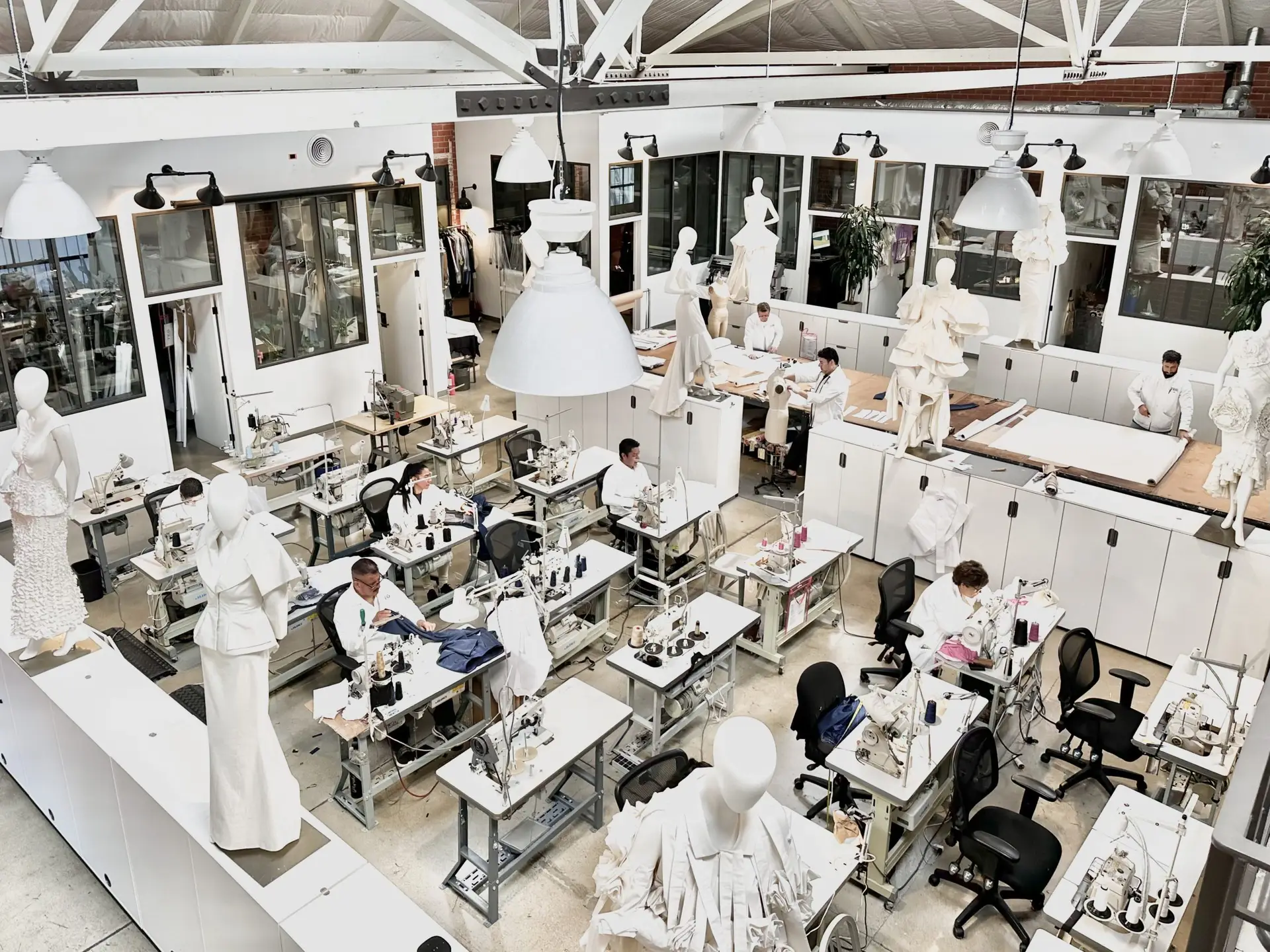
Choosing among the 2026 top couture garment production companies requires more than comparing polished portfolios. Buyers need to understand how each partner handles pattern development, hand finishing, fittings, and production planning. Couture garment production depends on skilled people and careful coordination. A beautifully finished sample is only one part of the picture.
Fashion educator Tim Gunn is known for the advice, “Make it work.” For buyers, that means asking how a company responds when a fitting reveals a problem or a fabric behaves differently than expected. Details matter. Request clear information about sampling stages, communication, quality checks, and realistic lead times. Ask who will oversee the work, and how revisions are recorded. A close view of a seam, lining, or buttonhole can reveal more than a glossy campaign image.
This guide introduces companies for buyers to assess, not a substitute for direct verification. Compare their demonstrated capabilities with your garment specifications, order size, and delivery needs. Ask to review relevant samples and clarify what each quotation includes. Fit is unforgiving. Some details may still be uncertain until development begins, and that deserves honest discussion. A strong production partner should explain its process plainly, identify constraints early, and provide evidence for its claims. The right choice is not always the most celebrated name; it is the company whose workmanship, communication, and capacity best match the collection.

Defining Haute Couture Production: Two Seasonal Collections and Made-to-Measure Fittings
In a couture-led production model, two seasonal collections provide a rhythm for design, sampling, and client fittings. Each collection begins with sketches, fabric tests, and carefully built prototypes. A sleeve may be recut several times before its shape feels balanced. The schedule matters, but the work rarely follows a perfectly straight line. Small details matter.
Made-to-measure fittings adapt a design to one client’s measurements and preferences. A fitting may reveal a shoulder seam that shifts, a waist that needs easing, or a hem that changes the garment’s movement. Skilled teams record these adjustments and check them against the pattern before final construction. Buyers should ask how many fitting stages are planned, who oversees alterations, and how production timelines allow for revisions. Clear answers are more useful than broad promises.
Tips: Request a sample fitting schedule and a written record of measurement changes. Confirm which fabrics and finishing details are included in the quoted scope. Leave room for another fitting; a neat first sample can still feel wrong in motion. Teams can miss things, too. A calm review of fit, comfort, and workmanship helps buyers make more informed decisions.
2026 Top Couture Garment Production Companies for Buyers - Defining Haute Couture Production: Two Seasonal Collections and Made-to-Measure Fittings
| Production Dimension | Industry Reference | What Buyers Should Verify |
|---|---|---|
| Seasonal collections | Haute couture is associated with two seasonal collections each year. Collection calendars and presentation dates are set well ahead of production. | Confirm the collection schedule, order deadlines, design approval dates, and whether the proposed delivery date aligns with the production calendar. |
| Made-to-measure service | Made-to-measure garments are developed for an individual client and adjusted to their measurements. The exact service and construction approach can vary by garment and atelier. | Ask how measurements are taken, whether a toile or fitting garment is used, what alterations are included, and how measurement changes are handled. |
| Fitting process | Fittings allow the garment to be assessed on the wearer and refined for fit and balance. The number and timing of fittings depend on the design, materials, and client arrangements. | Obtain a written fitting plan, including fitting locations, required client attendance, approval checkpoints, and arrangements for remote clients. |
| Pattern development | A bespoke pattern is developed or adapted to achieve the intended silhouette and fit. Complex designs may require several pattern and construction revisions. | Clarify who owns or retains the pattern, whether it can be reused for repeat orders, and how pattern changes are documented and priced. |
| Hand finishing and embellishment | Handwork, embroidery, and intricate finishing can add substantial skilled labor. The effort varies significantly with the design and materials. | Request a specification of handwork, material sourcing, sample-approval stages, and the method used to record approved workmanship standards. |
| Production capacity | Couture production is labor-intensive and typically made in limited quantities. Available capacity depends on the atelier’s staffing, current orders, and garment complexity. | Confirm the number of pieces that can be made in the requested period, the work performed in-house, and any subcontracted processes. |
| Lead time and delivery | There is no single lead time for all couture garments. Schedules depend on design development, fittings, material availability, handwork, and approval timing. | Agree on a milestone-based schedule covering design sign-off, materials, fittings, final inspection, shipping, and contingency time. |
| Quality and documentation | Quality review may cover measurements, seams, finishing, embellishment security, and conformity with the approved sample or design specification. | Define acceptance criteria, inspection points, defect correction terms, care instructions, and documentation supplied with the finished garment. |
| Designation and credentials | “Haute Couture” is a protected designation in France, with eligibility assessed through an official framework. The term should not be treated as a generic synonym for luxury clothing. | If designation status matters to the purchase, verify current official eligibility and distinguish it from a supplier’s general couture, bespoke, or made-to-measure claims. |
FAQS
The first sample reveals proportion, drape, and construction issues. One fitting is rarely enough.
Ask the wearer to sit, reach, and walk. Check for waist pinching or sleeves pulling across the elbow.
Keep exact measurements and dated photos. A clear fit log helps the next sample reflect decisions, not memory.
Compare seams, lining, closures, stitch consistency, and fabric direction with the approved reference. Recheck after pressing.
A screening range is 50–200 pieces per style and color. Samples may take three to six weeks; bulk production may take eight to fourteen weeks after approval.
Separate fabric minimums, hand embroidery, fittings, and late design changes can add cost or time. Small runs cost more.
Check pattern development, sampling, fabric, trims, handwork, finishing, packaging, and freight. Ask for written assumptions about fabric quality and rejected pieces.
Request current facility audits, wage and worker-hour records, subcontractor details, and material traceability. Verify energy and material data; a spreadsheet may miss factory-floor details.
A second person may catch issues the maker has stopped noticing. Not every flaw shows under studio lights.
Conclusion
Couture garment production combines exceptional handcraft with carefully managed manufacturing processes. This guide explains how haute couture differs from standard apparel production, including the role of seasonal collections, individually measured fittings, and specialist techniques such as embroidery, tailoring, and intricate finishing. It also outlines how buyers can assess an atelier’s skilled team, craft capabilities, equipment, and realistic production capacity before beginning a project.
From the first prototype through fittings and final inspection, clear communication and consistent quality control help turn a design into a finished garment. Buyers can compare producers by considering order quantities, lead times, costs, and relevant compliance practices, while accounting for the extra time and expertise that complex work may require. The guide concludes with practical ways to match a producer to the project’s order scale and technical demands, helping buyers set expectations and make informed sourcing decisions.