Fashion Development & Apparel Manufacturing Insights
What Is the Best Custom Activewear Manufacturer in China?
Table of Contents
- What Defines a Custom Activewear Manufacturer?
- How to Assess Chinese Activewear Manufacturing Capabilities
- Which Fabrics, Designs, and Customization Options Matter?
- How to Compare Quality, Pricing, Minimum Orders, and Lead Times
- How to Select the Best Manufacturer for Your Activewear Brand
- FAQS
- Conclusion
- Related Posts
Choosing the best custom activewear manufacturer in China requires more than comparing factory prices. It requires evidence, communication, and practical testing. A dependable partner should understand compression leggings, seamless bras, training tops, and team uniforms. They should also explain fabric choices clearly, from recycled polyester to nylon-spandex blends.
Custom activewear manufacturing often begins with a technical pack, not a sales promise. Ask for sample measurements, stitching details, color standards, and fabric composition. A serious factory should provide a realistic production timeline and identify possible risks early. Check whether its quality team inspects fabric rolls, seam strength, print placement, and final packing. Small details matter. A crooked logo can weaken an otherwise excellent garment.
Factory visits, video audits, and independent product testing can reveal more than polished photographs. Certifications may support credibility, but they should be verified and matched to the actual production site. Customer references also deserve careful review. Some manufacturers excel at large orders but struggle with smaller brands and frequent design changes. Others offer flexible minimum quantities but have limited technical development experience.
There is no universal “best” manufacturer. The right choice depends on your product, budget, order volume, and target market. This guide compares practical selection criteria, including sampling, communication, quality control, compliance, and after-sales support. It also considers uncomfortable questions. What happens when a sample fails? Who pays for corrections? Can the factory repeat the same fit six months later? Honest answers often matter more than impressive promises.
What Defines a Custom Activewear Manufacturer?
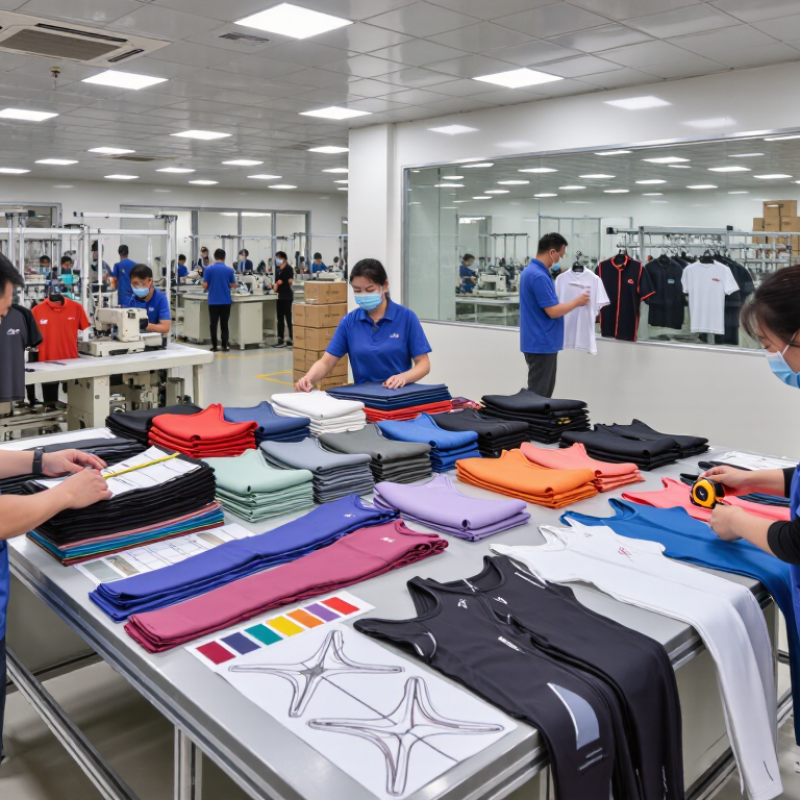
A custom activewear manufacturer does more than print a logo on leggings. It develops garments around movement, fabric behavior, and the buyer’s specifications. A reliable factory should understand compression levels, stretch recovery, moisture management, and skin comfort. These details affect how a sports bra feels after repeated training.
Technical capability is a clear defining factor. The manufacturer should provide fabric samples, measurement charts, and construction recommendations before production. Useful questions include: What is the fabric weight? How many wash tests were completed? Can the factory maintain color consistency between batches? Flatlock seams, reinforced gussets, and secure waistbands show practical garment knowledge. Small details matter.
A dependable partner also uses a traceable quality process. Inspectors should check measurements, stitching, print placement, and loose threads before shipment. Clear communication matters when a sample needs correction. The process is rarely perfect. A waistband may feel too tight, or a color may appear different under warehouse lighting. Honest manufacturers record these issues and adjust the next sample. They should also explain minimum order quantities, lead times, testing options, and applicable safety requirements without making unsupported promises. A factory that welcomes revision is often more valuable than one that only offers a low quotation. Experience is visible in the questions it asks.
What Defines a Custom Activewear Manufacturer?
A strong custom activewear manufacturer is typically evaluated by its ability to deliver consistent quality, flexible customization, reliable lead times, and transparent production control. The benchmark scores below represent commonly used procurement criteria and do not refer to any specific company or brand.
Higher scores indicate stronger performance against common buyer expectations for custom activewear production.
How to Assess Chinese Activewear Manufacturing Capabilities
Choosing the best custom activewear manufacturer in China requires more than comparing price lists. Manufacturing capability appears in small, measurable details. Ask how the factory handles fabric testing, pattern development, and production changes. A reliable team should explain GSM, stretch recovery, colorfastness, and shrinkage in clear terms. Vague answers deserve caution.
Request samples made from the same fabric planned for bulk production. Check waistband recovery after repeated stretching. Examine flatlock seams, logo placement, lining coverage, and stitch density. Ask for a size set, not only one attractive sample.
Production capacity also matters. Review monthly output, machine types, quality checkpoints, and subcontracting policies. An honest factory will disclose its limits. That builds trust.
Documentation should support every claim. Review business licenses, audit records, test reports, and export experience. Independent material testing can verify performance claims before large payments or production commitments. During a factory visit, observe cutting tables, fabric storage, and finished-goods inspection. Dust, mixed rolls, or handwritten tracking may reveal weak controls. A polished showroom can mislead. I would also test communication under pressure, such as a revised measurement chart or urgent sample correction. Not every capable manufacturer is perfect. Delays and minor errors can happen, but transparent corrective action matters more than promises. Reliable partnerships grow through evidence, consistent updates, and realistic production planning.
Which Fabrics, Designs, and Customization Options Matter?
What Is the Best Custom Activewear Manufacturer in China?
Choosing a custom activewear manufacturer requires more than comparing prices. Fabric performance should guide the decision. Nylon and spandex offer soft stretch and a smooth finish. Polyester often dries faster and handles repeated washing well. Ask for fabric weight, stretch recovery, opacity, and colorfastness reports. A lighter fabric may feel comfortable, but it can become transparent during deep squats. No fabric is perfect.
Design details also affect comfort and production quality. Flatlock seams can reduce rubbing during running or training. A gusset may improve movement in leggings. High-rise waistbands need stable elastic, not excessive compression. Reflective trims help outdoor visibility, but they can increase sampling time. Custom options may include colors, prints, woven labels, size grading, packaging, and recycled fibers. In practical sampling, small logo changes sometimes alter the sewing process. That detail is easy to underestimate.
Tips: Send a clear tech pack with measurements, artwork, fabric preferences, and tolerance limits. Request a pre-production sample before bulk manufacturing. Check stitching, seam strength, fit, shrinkage, and wash results. Ask how rejected pieces are handled. Good communication matters, but written records matter more. An honest manufacturer should explain limitations instead of promising everything.
How to Compare Quality, Pricing, Minimum Orders, and Lead Times
Choosing the best custom activewear manufacturer in China requires more than comparing a quotation. In my sourcing work, fabric performance has exposed the biggest differences. Request a pre-production sample in your final fabric and color. Test stretch recovery, opacity, seam strength, and sweat-wicking behavior after repeated washing. Check size measurements against a signed specification sheet. A polished sample is not enough. Ask whether the factory can repeat it across 500 pieces. Not always.
Compare pricing line by line, not only by unit cost. Ask about fabric weight, trims, labels, packaging, pattern fees, sampling charges, and shipping terms. A lower price may use lighter fabric or exclude development costs. That is easy to miss. Request tiered prices for 100, 300, and 1,000 units. Then calculate the real cost of defects, rework, and delayed delivery. Minimum order quantities need similar attention. Some factories accept a small first order but require one color per size group. Others set separate MOQs for custom-dyed fabric. Get these conditions in writing.
Lead time should cover approval, material booking, cutting, sewing, inspection, and packing. Ask for a production calendar with milestone dates. For reliability, verify available machinery, trained operators, and a documented final inspection process. Video calls help, but they cannot replace physical checks. I have seen schedules fail when fabric approval was treated as a minor step. Leave buffer for testing and corrections. Communication quality matters too; clear replies, dated photos, and honest updates often predict performance better than a confident sales promise. Still, every forecast deserves challenge.
How to Select the Best Manufacturer for Your Activewear Brand
Selecting the best custom activewear manufacturer in China starts with product clarity, not attractive pricing. Define fabric weight, stretch recovery, seam construction, color standards, size range, and packaging requirements. A capable factory should explain trade-offs in plain language. Ask for production photos, machine capabilities, and recent test reports. Do not rely on polished catalog images alone. Factory visits or independent audits can reveal crowded cutting tables, weak storage, or inconsistent housekeeping.
Request development samples before discussing large orders. Check waistband pressure, opacity during movement, stitch tension, pocket stability, and wash performance. Wear-test pieces through squats, running, and repeated laundering. Small defects become expensive returns. Confirm minimum order quantities, sample fees, lead times, payment stages, and remake policies in writing. The best partner welcomes measurable standards and records inspection results for every batch.
Technical expertise matters, but communication often decides whether a project survives. Choose a team that answers specific questions, flags unrealistic requests, and provides one accountable contact. Verify fabric origin, dyeing controls, needle inspection, worker safety, and environmental documentation. Claims need evidence. No factory is perfect. An early sample may disappoint, yet that can reveal valuable working habits. Select a manufacturer that responds quickly and corrects the pattern carefully. Compare total reliability, not the lowest quote. A slightly higher unit cost may protect fit consistency, delivery schedules, and customer trust.
| Selection Criterion | Weight | Practical Benchmark | What to Verify | Potential Red Flags |
|---|---|---|---|---|
| Manufacturing Experience | 12% | At least 5 years of documented experience in sportswear or performance apparel. | Review production photos, technical capability, product categories, and experience with similar construction methods. | Only trading activity, unverifiable factory information, or no technical production records. |
| Minimum Order Quantity | 10% | Approximately 100–300 pieces per style or color for small and emerging brands. | Confirm whether the MOQ applies per style, color, fabric, size range, or total order. | Unclear MOQ rules, large hidden minimums, or substantial fees for low-volume orders. |
| Sampling and Product Development | 12% | Initial sample development commonly takes 7–15 working days, depending on complexity. | Check pattern-making, tech-pack review, sample revisions, grading, and fit-testing procedures. | No physical sample approval process or inability to revise patterns before bulk production. |
| Production Lead Time | 12% | Around 30–60 days after final approval, material confirmation, and deposit payment. | Ask for a written production schedule covering fabric sourcing, cutting, sewing, printing, inspection, and packing. | Unrealistic promises, no milestone schedule, or repeated delivery delays. |
| Fabric and Trims Availability | 10% | Access to common performance fabrics such as nylon-spandex, polyester-spandex, recycled polyester, and mesh. | Verify fabric composition, weight, stretch recovery, colorfastness, pilling resistance, and moisture-management performance. | Fabric substitutions without approval, inconsistent dye lots, or missing material test information. |
| Quality Control System | 15% | Documented inspections covering incoming materials, inline production, finished garments, measurements, and packing. | Request inspection checklists, defect classifications, measurement tolerances, corrective-action records, and final inspection reports. | Only visual inspection at the end of production or no defined acceptable quality limits. |
| Compliance and Testing | 10% | Ability to support applicable product testing and provide relevant social or environmental compliance documents. | Check test reports for restricted substances, colorfastness, seam strength, fabric performance, and production-site compliance. | Expired certificates, mismatched factory addresses, or refusal to provide documentation for verification. |
| Customization Capability | 8% | Support for custom patterns, labels, packaging, sublimation, embroidery, heat transfer, and cut-and-sew details. | Confirm artwork requirements, logo application limits, color matching, packaging options, and ownership of patterns and files. | Limited customization presented as full private-label service or unauthorized use of supplied designs. |
| Pricing Transparency | 6% | A written quotation separating garment cost, sampling, materials, decoration, packaging, tooling, and shipping. | Compare quotations using the same fabric, specifications, quantity, packaging, shipping terms, and payment conditions. | Very low initial pricing followed by frequent surcharges or vague inclusions and exclusions. |
| Communication and Export Readiness | 5% | Clear English communication, documented approval procedures, export experience, and reliable response times. | Evaluate response quality, time-zone coordination, purchase-order accuracy, shipping documents, and issue-resolution speed. | Slow replies, undocumented changes, unclear payment instructions, or inconsistent commercial terms. |
FAQS
Nylon and spandex provide soft stretch and a smooth surface. Polyester often dries faster and withstands repeated washing. No fabric is perfect. Request fabric weight, stretch recovery, opacity, and colorfastness reports.
Test the final fabric during deep squats and stretching. Check opacity under bright light. A lightweight fabric may feel comfortable but reveal more than expected. This is easy to underestimate.
Flatlock seams can reduce rubbing during running. Gussets may improve movement in leggings. High-rise waistbands need stable elastic, not extreme compression. Small details matter.
Options may include colors, prints, woven labels, size grading, packaging, and recycled fibers. A small logo change can alter the sewing process. Ask for confirmation before sampling.
Include measurements, artwork, fabric preferences, tolerance limits, and construction details. Add seam information and placement diagrams. Clear written records prevent avoidable confusion.
Check stitching, seam strength, fit, shrinkage, and sweat-wicking performance. Wash the sample repeatedly. Compare measurements with the signed specification sheet. A polished sample is not enough.
Compare fabric, trims, labels, packaging, pattern fees, sampling, and shipping terms. Request prices for different quantities. A low unit price may exclude development costs or use lighter fabric.
Ask whether minimums apply by color, size group, or custom-dyed fabric. Get every condition in writing. A small first order may still have hidden restrictions.
Request a calendar covering approval, material booking, sewing, inspection, and packing. Ask about machinery, trained operators, and final inspection procedures. Video calls help, but physical checks remain useful.
Leave extra time for testing and corrections. Ask for dated photos and honest updates. Confident promises can still fail. Every forecast deserves challenge.
Conclusion
Choosing the best custom activewear manufacturer in China requires more than comparing prices. A reliable partner should demonstrate strong expertise in technical sportswear, including fabric selection, pattern development, stitching quality, stretch recovery, moisture management, and size consistency. Buyers should evaluate factory capabilities through product samples, production equipment, quality-control procedures, communication efficiency, and experience with customized designs. Important customization options may include recycled or performance fabrics, private labels, unique colors, prints, trims, packaging, and tailored fits for different sports and target customers.
A practical comparison should cover minimum order quantities, sample fees, production lead times, payment terms, inspection standards, and shipping coordination. The lowest quotation may not provide the best value if it results in inconsistent quality or delayed delivery. For successful Custom activewear manufacturing, brands should clearly define technical specifications, request representative samples, confirm testing and inspection processes, and assess whether the manufacturer can support both small trial orders and future growth. Selecting a transparent, responsive, and capable partner can help create dependable activewear products while controlling costs and maintaining a consistent customer experience.
Blog Tags: