China remains an important sourcing base for global fashion brands, with manufacturers offering capabilities that range from small-batch sampling to larger production runs. The phrase “best manufacturer” can be misleading. A suitable partner depends on a brand’s fabrics, construction standards, order volume, and delivery needs.
Luxury clothing manufacturing relies on more than a premium-looking sample. A jacket may use fine wool, but uneven lapels or weak button stitching can undermine the finished piece. For silk blouses, accurate color matching and careful seam finishing matter just as much as the fabric itself. Details show capability.
This guide explores how global brands can assess Chinese luxury clothing manufacturers, including product specialization, sampling processes, quality checks, communication, and production capacity. It also considers practical questions, such as whether a factory can follow a detailed tech pack and explain how it handles defects. Ask for evidence, not just promises. Sample garments, production references, and clear inspection procedures can help buyers make a more informed choice. Still, no checklist guarantees a smooth partnership; I would treat early claims cautiously and verify them directly. A shortlist is only a starting point. By comparing capabilities against specific product requirements, brands can identify manufacturers better suited to their collections and reduce avoidable surprises before production begins.

What Defines a Luxury Clothing Manufacturer in China?
A luxury clothing manufacturer in China is defined by controlled craftsmanship, not a polished showroom. Experienced teams understand how silk, cashmere, wool, and fine cotton behave during cutting and pressing. They test fabric shrinkage before production begins. They also inspect grain direction, seam tension, lining movement, and surface defects.
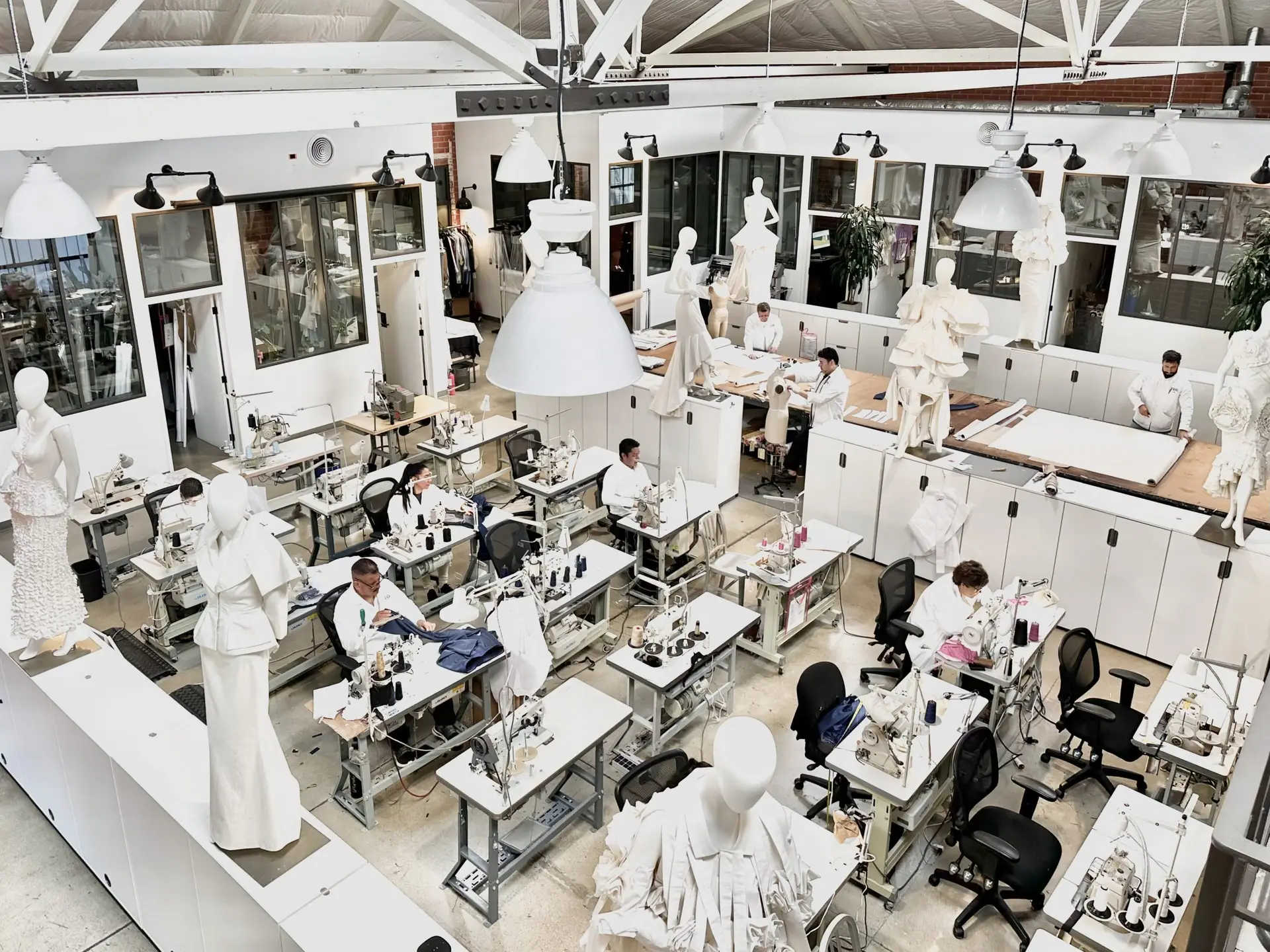
Reliable manufacturers keep clear production records. These may include fabric origins, dye-lot information, pattern revisions, and inspection results. A skilled sample room should turn technical sketches into balanced garments with clean silhouettes. Small details matter. Uneven topstitching can weaken an otherwise beautiful jacket. Experienced quality controllers inspect collars, cuffs, buttonholes, and hems under strong lighting. They should explain problems honestly instead of hiding them.
No factory is flawless. The important question is how quickly it identifies and corrects mistakes. A transparent manufacturer welcomes third-party audits and provides realistic delivery estimates. It should also protect confidential designs and maintain consistent worker training. Responsible sourcing and safe working conditions support long-term quality. Cheap pricing alone can be misleading.
Tips: Request a detailed sample before signing a large order. Check measurement tolerances, fabric recovery, and wash results. Visit the production floor when possible. Speak with the quality manager, not only the sales representative. Ask how rejected garments are recorded and corrected. Trust evidence more than promises.
Core Manufacturing Capabilities and Production Models
Luxury clothing production depends on more than fine fabric and careful stitching. A capable manufacturer should manage pattern development, sample making, grading, cutting, sewing, pressing, and final inspection. Ask how each stage is documented. Clear records make it easier to trace measurements, fabric lots, and inspection results when a sample differs from bulk production.
Production models vary with order size and product complexity. Full-package manufacturing can coordinate sourcing, sampling, and assembly through one team, while cut-and-sew services may suit brands that provide their own materials. Some factories accept small pilot runs; others need larger quantities to use labor and equipment efficiently. Confirm minimums, lead times, and how changes affect the schedule. Details matter.
A practical review includes a sample room, inspection checkpoints, and operators familiar with delicate linings, structured shoulders, or hand-finished details. Request a pre-production sample and compare it with the approved specifications under good lighting. Check seam alignment, button placement, and how the garment hangs after pressing. One limitation is easy to miss: a strong sample does not prove consistent bulk quality. Agree on measurable tolerances and inspect production units before shipment. Small differences happen. What matters is whether the factory records them, explains the cause, and corrects repeat issues.
How Global Brands Can Evaluate Potential Manufacturers
Choosing a luxury clothing manufacturer in China requires more than comparing price lists. Global brands should examine production evidence, not impressive promises. Request recent samples, factory addresses, and a clear production flow. Watch how fabric rolls are stored, labeled, and protected from dust. Small details often reveal bigger habits. Ask who controls pattern corrections, cutting accuracy, and final pressing. A qualified team should explain tolerances in practical terms.
Evaluate technical skill through a small, paid trial order. Check seam strength, stitch density, lining alignment, button attachment, and measurement consistency. Review the same garment after washing or dry handling when relevant. Ask for test records and defect reports, not only perfect samples. The factory should identify its own weak points. That honesty matters. Confirm worker training, equipment maintenance, material traceability, and capacity during peak seasons. Independent audits can help, but they do not replace an on-site assessment.
Reliable communication is equally important. Set written specifications for fabric weight, color standards, packaging, inspection points, and delivery windows. Compare how quickly the manufacturer answers difficult questions. Slow replies may become costly later. Verify business registration, export experience, quality systems, and references from comparable production categories. I once treated a beautiful sample as proof of capability; it was not. Bulk production exposed uneven pressing and rushed inspection. Build approval gates before cutting begins, then record every change. The best choice may not be the cheapest or most polished. It is the supplier that proves repeatable quality, admits limits, and improves with evidence.
Regional Strengths and Sourcing Considerations
China’s regional apparel clusters offer different strengths for luxury clothing sourcing. Guangdong supports refined tailoring, small-batch development, and fast sample revisions. Zhejiang is strong in silk, wool blends, knitting, and fabric finishing. Jiangsu offers mature weaving capacity and stable production planning. Fujian is better suited to sports-luxury, technical fabrics, and performance construction. Shanghai provides design services, merchandising talent, and international logistics access.
China Customs reported approximately 293.6 billion dollars in textile and apparel exports during 2023. This scale shows deep supplier capacity, but it does not guarantee luxury-level execution. The Bain-Altagamma Luxury Market Monitor estimated the personal luxury goods market at 363 billion euros in 2024. Smaller production errors can therefore affect expensive materials, delivery windows, and customer trust. Sample before scaling.
A reliable sourcing process should inspect fabric mills, sewing lines, and finishing departments separately. Buyers should verify fiber content, colorfastness, shrinkage, needle detection, and final measurement records. Factory audits should also review worker safety, wage documentation, subcontracting controls, and environmental procedures. Certifications help, but certificates alone are not enough. A production visit can reveal inconsistent pressing, crowded sampling rooms, or weak quality records. These details are easy to miss during video meetings. Regional specialization may reduce development time, yet concentrating every process in one area can create hidden dependency. A dual-source plan may cost more initially, but it can protect continuity when capacity changes.
From Sampling to Delivery: The Manufacturing Partnership Process
Choosing a luxury clothing manufacturer requires more than reviewing fabric swatches. Reliable partnerships begin with a clear technical package, realistic timelines, and direct communication. The manufacturer should assess pattern construction, fabric behavior, trims, finishing, and expected order quantities. Experienced teams also identify risks before sampling begins. A silk blend may require different seam handling than a structured wool fabric. Small details matter.
The sampling stage turns ideas into measurable results. The factory prepares a prototype, checks measurements, and records each adjustment. Fit sessions should examine shoulder balance, sleeve movement, lining tension, and pressing quality. A first sample is rarely perfect. That is normal, but repeated mistakes are not. One overlooked measurement can affect thousands of finished garments. Digital comments help, yet physical inspection remains essential. Photos cannot reveal every hand-feel or construction issue.
After approval, production moves through material inspection, cutting, sewing, finishing, and quality control. Skilled supervisors compare finished pieces with the approved sample and measurement chart. They also check loose threads, uneven stitches, color consistency, labels, packaging, and carton protection. Export documents and product information should match the destination market’s requirements. Delivery planning includes buffer time for port delays and final inspections. Even strong manufacturers can experience fabric shortages or late approvals. Honest updates are more valuable than optimistic promises. A dependable manufacturing partner shares evidence, accepts corrections, and improves the process with every collection.
FAQS
Controlled craftsmanship, accurate records, and repeatable quality define reliability. Clean collars, balanced sleeves, and even hems matter.
Test shrinkage, grain direction, surface defects, and fabric recovery. Inspect rolls for dust, damage, and clear labeling.
A sample reveals measurement accuracy, seam strength, lining movement, and pressing quality. A beautiful sample proves little alone.
Check stitch density, button attachment, measurement consistency, and seam strength. Review the garment after washing when relevant.
Ask for defect reports, inspection results, and correction records. Strong teams admit problems instead of hiding them.
Confirm fabric weight, color standards, tolerances, packaging, inspection points, and delivery windows. Record every approved change.
It helps reveal storage habits, equipment conditions, and worker training. Independent audits help, but they cannot replace direct observation.
The process moves through material inspection, cutting, sewing, finishing, and final quality control. Each stage needs documented checks.
Fabric shortages, late approvals, port delays, and rushed inspections can affect schedules. Honest updates are better than optimistic promises.
Record each issue, adjust the pattern, and approve corrections before cutting. Mistakes happen. Repeated mistakes need deeper review.
Conclusion
China’s luxury clothing manufacturers are increasingly recognized for combining skilled craftsmanship, advanced production technology, flexible order capabilities, and competitive efficiency. Luxury clothing manufacturing is defined not only by premium fabrics and precise construction, but also by strong quality control, attention to finishing details, responsible material sourcing, and the ability to interpret sophisticated design concepts. Manufacturers may support full-package production, cut-and-sew services, small-batch development, or scalable mass production, depending on a client’s needs.
Global brands should evaluate potential partners through factory audits, sample quality, communication responsiveness, production capacity, compliance documentation, and transparency in pricing and timelines. Regional strengths can influence access to specialized labor, textile suppliers, and logistics networks, so sourcing decisions should consider both product requirements and location. A successful partnership typically moves through design review, material selection, prototype sampling, fitting adjustments, pre-production approval, manufacturing, inspection, packaging, and delivery. Clear specifications and consistent communication help ensure that the final garments meet luxury standards from concept to completion.