
The Evans Group – Ethical clothing manufacturing studio in Los Angeles

Fashion Development & Apparel Manufacturing Insights
0%

Choosing the best China womenswear clothing manufacturers requires more than comparing factory prices. Buyers should examine sampling accuracy, fabric traceability, production capacity, and quality-control records. A reliable supplier should explain its minimum order quantity, lead times, inspection process, and corrective actions clearly.

The opportunity is substantial. Textile Exchange’s Materials Market Report 2024 recorded global fiber production at approximately 124 million tonnes in 2023. Polyester represented about 57% of that volume, while cotton accounted for roughly 22%. These figures reveal both scale and pressure. Womenswear clothing manufacturing now demands attractive design, stable performance, and better material decisions. A soft blouse still needs colorfastness testing, seam-strength checks, and careful pressing before shipment.

Look closely at the factory floor. Is the sample room organized? Are measurement sheets updated? Can the manufacturer show batch records for buttons, labels, and fabric rolls? Small details often separate a dependable partner from a polished sales presentation. Fashion Revolution co-founder Orsola de Castro offers a useful reminder: “Loved clothes last.” That principle connects design quality with responsible manufacturing.

McKinsey’s State of Fashion 2025 describes a cautious market shaped by weak consumer confidence, regional uncertainty, and increasing operational complexity. Therefore, the “best” manufacturer is not automatically the largest one. It may be a specialized Chinese factory with strong womenswear experience, transparent communication, and flexible development support. This judgment needs evidence. Factory claims alone are insufficient. Independent inspections, verified certifications, reference checks, and production samples provide stronger assurance. Even then, no supplier relationship is perfect. Buyers should test assumptions before committing to large orders.
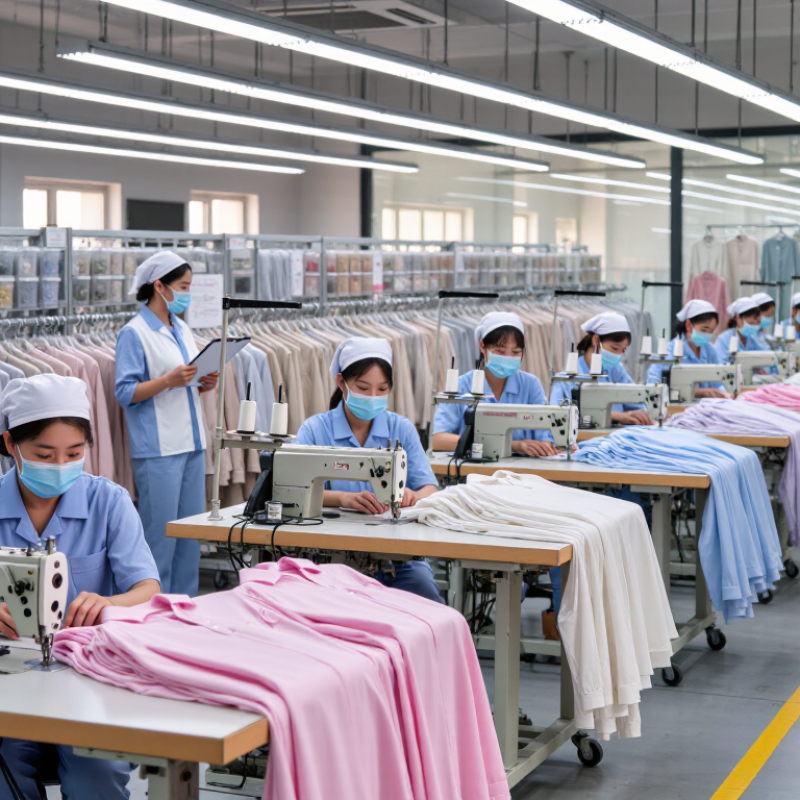
China Best Womenswear Clothing Manufacturers?

China’s Womenswear Manufacturing Strength: 31.6% of Global Clothing Exports

China Best Womenswear Clothing Manufacturers?

China’s womenswear manufacturing strength is reflected in its reported 31.6% share of global clothing exports. This scale supports broad fabric access, skilled pattern making, and efficient production networks. In practice, a factory may source woven cotton in one region and complete garment finishing nearby. That proximity can shorten sampling time and reduce transport delays.

The best manufacturer is not always the largest one. A reliable partner should understand tech packs, size grading, fabric shrinkage, and detailed measurement charts. Ask for a pre-production sample. Check seam strength, stitching density, color consistency, and wash performance. Request clear records for quality inspections, worker safety, and environmental procedures. These details show professional control beyond a polished showroom.

Small details matter.

Production experience also reveals weaknesses. A low sample price may hide slow communication or inconsistent bulk quality. No factory performs perfectly on every style. Some are strong in tailored jackets but less capable with delicate knitwear. Buyers should compare factory capacity with product needs, order volume, and delivery expectations. Independent inspections can reduce risk, although they cannot replace careful supplier communication. The 31.6% export figure shows China’s manufacturing depth, but responsible selection still requires evidence, testing, and honest review.

China accounted for 31.6% of global clothing exports in 2023, significantly exceeding the shares of other major apparel-exporting economies. The figures represent each economy’s share of worldwide clothing exports, based on WTO merchandise trade statistics.

How to Evaluate China’s Best Womenswear Manufacturers by MOQ, Capacity, and Lead Time

China Best Womenswear Clothing Manufacturers?

Evaluating a womenswear manufacturer in China requires more than checking a polished website. Start with MOQ, because a low minimum order can protect cash flow during market testing. Ask whether MOQ applies per style, color, or size breakdown. A factory may quote 100 pieces, then require 100 pieces for each color. That difference can change your launch plan. Request recent production records, workshop photos, and sample approval details. These documents do not prove everything, but they reveal how carefully the supplier works.

Capacity must match your real sales forecast, not an optimistic spreadsheet. Ask for monthly output by product type, available sewing lines, and peak-season restrictions. A factory producing woven dresses may not handle stretch knitwear efficiently. Lead time should begin after sample approval and material confirmation. Clarify fabric sourcing, lab-dip approval, cutting, sewing, inspection, and packing dates. In my experience, unclear fabric availability causes more delays than sewing speed. Build a buffer of one or two weeks. Even experienced teams misjudge holidays, revisions, or port congestion.

Tips: Compare three written quotations using identical specifications. Order a pre-production sample before bulk manufacturing. Check measurement tolerances and inspection standards in writing. Be honest about forecast uncertainty. Promising unrealistic volume can weaken communication. A supplier with slower lead times may be safer than one making impossible promises. Reassess after the first order, because actual performance matters more than an impressive sales conversation.

Key Production Hubs: Guangdong, Zhejiang, Jiangsu, and Their Specialties

China’s strongest womenswear manufacturing hubs include Guangdong, Zhejiang, and Jiangsu. Each region offers different production advantages.

Guangdong

is known for fast fashion, denim, knitwear, and responsive small-batch production. Cities such as Guangzhou and Dongguan support dense supplier networks. Buyers can often source fabric, trims, sampling, and sewing within one area. However, speed may sometimes affect finishing consistency. Careful inspections remain necessary.

Zhejiang

has strong fabric development and garment production, especially around Hangzhou, Ningbo, and Shaoxing. It suits dresses, blouses, printed textiles, and commercially focused collections. The region offers many material choices, but quality can vary between mills.

Jiangsu

is respected for refined tailoring, knitwear, silk-related products, and structured woven garments. Suzhou and Nantong are useful for buyers seeking cleaner construction and stable workmanship. Yet, higher craftsmanship usually requires clearer specifications and longer sampling time.

Tips: Request fabric composition, shrinkage data, measurement charts, and pre-production samples. Visit the facility when possible, or use an independent inspection service. Check seam density, pressing quality, color consistency, and label placement. Ask how defects are recorded and corrected. Do not rely only on photographs. A supplier may look professional online but still miss small fitting details. My own mistake was approving a sample before testing it after washing. That decision created avoidable adjustments later. Keep communication written, measurable, and realistic.

Quality and Compliance Checks: ISO 9001, BSCI, WRAP, and AQL 2.5

Selecting the best womenswear manufacturer in China requires more than checking fabric samples. ISO 9001 indicates a documented quality-management system, including inspection records, corrective actions, and process controls. The 2023 ISO Survey reported 1,265,216 ISO 9001 certificates worldwide, showing its broad industrial acceptance. However, certification alone does not guarantee perfect garments.

BSCI assessments examine working conditions, worker protection, wages, and management practices. They are social-compliance assessments, not product-quality certificates. WRAP focuses on lawful, ethical, and safe production through twelve workplace principles. Factory buyers should verify certificate scope, site address, expiry date, and audit findings directly. A clean certificate can still hide weak production discipline.

AQL 2.5 adds measurable control. Under common ANSI/ASQ Z1.4 sampling practice, inspectors select units according to lot size and inspection level. AQL 2.5 is not a promise that 2.5% of garments will be defective. It defines an acceptance benchmark for sampling decisions. Inspectors should record critical, major, and minor defects separately, then check measurements, stitching, color consistency, zippers, and labeling. Textile Exchange’s Materials Market Report 2024 also shows rising attention to traceability and certified material claims. Documentation matters.

Some factories pass audits yet struggle with late-stage alterations. That gap deserves scrutiny. Request recent inspection reports, production photos, worker interviews where appropriate, and a pre-shipment inspection. Sampling can miss hidden defects. A thoughtful buyer keeps testing.

A Data-Driven Sourcing Process from Sampling to Bulk Production

China Best Womenswear Clothing Manufacturers?

A Data-Driven Sourcing Process from Sampling to Bulk Production

Choosing among China’s best womenswear clothing manufacturers requires more than a low quote. A data-driven process starts with measurable requirements: fabric composition, size tolerance, target cost, MOQ, and delivery window. I record every supplier response in one comparison sheet. This prevents attractive promises from replacing evidence. Ask for factory photos, recent audit records, production capacity, and relevant sample experience. Documents matter. So does a video call from the cutting room.

Sampling should test the process, not only the garment. Send a technical pack with graded measurements, seam details, trims, and approved construction notes. Check the first sample against a measurement chart. Record deviations in millimeters. Test shrinkage after washing, color stability, seam strength, and pressing quality. A second sample often reveals more than the first. It also exposes unclear instructions. That is on the buyer, sometimes.

Before bulk production, confirm the pre-production sample, fabric lot, packaging details, inspection standard, and payment milestones in writing. Track cutting output, sewing efficiency, defect rates, and rework daily when possible. An inline inspection can catch twisted seams before hundreds of pieces are packed. Final inspection should use a defined sampling level and photos. Keep a small tolerance for human variation. Perfect data does not guarantee a perfect garment. It helps locate the real problem early, when correction costs less.

China Best Womenswear Clothing Manufacturers? - A Data-Driven Sourcing Process from Sampling to Bulk Production

Benchmark framework for evaluating womenswear manufacturing partners from initial inquiry through bulk delivery

Sourcing Stage Evaluation Dimension Recommended KPI Practical Benchmark Target / Acceptance Level Risk Signal
1. Supplier Screening Factory capability match Relevant product categories produced during the last 12 months At least 3 comparable womenswear categories, such as dresses, blouses, skirts, or tailored separates Documented experience with the required construction, fabric, and finishing methods Only generic product photos; no technical production evidence
2. Initial Inquiry Quotation completeness Percentage of required commercial details included in the first quotation Price, MOQ, sampling fee, lead time, fabric composition, packaging, and trade terms At least 90% of requested fields answered clearly and consistently Unexplained price changes or missing cost assumptions
3. Commercial Review Minimum order quantity Units required per style and per color Common starting ranges are approximately 100–300 units per style, with higher quantities for custom fabric development MOQ fits forecast demand without creating excessive inventory exposure MOQ applies separately to every size, color, or fabric variation
4. Sampling Sample development speed Working days from receipt of complete tech pack to first sample dispatch Approximately 7–15 working days for standard styles; 15–25 for complex construction Timeline is confirmed in writing with milestone dates Sample starts before measurements, artwork, or construction details are finalized
5. Fit Approval Sample revision control Number of revisions required before approval One to three revision rounds are typical when the tech pack and fit comments are clear Approved measurement chart, construction notes, and graded size specification are signed off Repeated fit errors caused by missing measurement tolerances
6. Fabric & Trims Material consistency Difference between approved standard and bulk fabric results Color, weight, width, composition, shrinkage, and hand feel checked before cutting Bulk materials match the approved swatch or lab-dip and pass required testing Bulk fabric is purchased before lab-dip or pre-production approval
7. Pre-Production Production readiness Completion of pre-production controls Approved pre-production sample, size-set review, cutting markers, operation bulletin, and packaging instructions No bulk cutting begins until all critical approvals are documented Factory relies on verbal approval or an outdated sample
8. Bulk Production Production lead time Working days from material approval to ex-factory completion Approximately 25–45 working days for standard womenswear orders; complex styles may require longer Production schedule includes fabric booking, cutting, sewing, finishing, inspection, and packing Lead time excludes fabric and trim procurement without disclosure
9. Quality Control Defect performance Final inspection result using an agreed sampling plan AQL 2.5 for major defects and AQL 4.0 for minor defects are commonly used reference levels Critical defects: zero; major and minor defects remain within the agreed acceptance limits No inspection report, defect classification, or corrective-action process
10. Delivery On-time shipment reliability Orders shipped on or before the confirmed ex-factory date A dependable supplier should demonstrate approximately 90% or higher on-time performance over recent orders Delivery date, carton count, packing list, and shipping documents are reconciled before dispatch Frequent date changes without production evidence or recovery plan
11. Post-Production Corrective-action capability Time required to respond to a documented quality claim Initial response within 1–2 business days and corrective-action plan within 5 business days Root cause, containment, replacement, credit, or process correction is documented Responsibility is assigned without evidence or preventive action
Benchmark note: Figures are practical industry reference ranges for initial sourcing decisions. Actual results vary by fabric availability, order complexity, seasonality, customization, testing requirements, and shipping terms.

FAQS

Why is China a major womenswear manufacturing market?

A reported 31.6% share of global clothing exports shows significant manufacturing depth. Factories can access fabrics, skilled pattern makers, and nearby finishing services. Scale helps, but it does not guarantee perfect quality.

What should buyers check before choosing a womenswear manufacturer?

Review tech-pack understanding, size grading, fabric shrinkage, and measurement charts. Request a pre-production sample. Check seams, stitching density, color consistency, and wash performance. A polished showroom proves very little.

How can buyers evaluate a factory’s minimum order quantity?

Ask whether the MOQ applies per style, color, or size breakdown. A quote for 100 pieces may mean 100 pieces per color. That difference can seriously change your launch budget. Clarify it in writing.

How should production capacity and lead time be assessed?

Ask for monthly output by product type and available sewing lines. Check restrictions during peak seasons. Lead time should start after sample approval and material confirmation. Add one or two weeks as a practical buffer.

Which manufacturing regions are useful for womenswear production?

Guangdong supports fast fashion, denim, knitwear, and small-batch production. Zhejiang offers fabric development, dresses, blouses, and printed textiles. Jiangsu is known for refined tailoring, knitwear, and structured woven garments. Regional strengths still vary by factory.

What quality checks are important for fabric and finished garments?

Request fabric composition, shrinkage data, and color approval records. Test the garment after washing. Check pressing, seam density, measurements, and label placement. Small errors become expensive later.

Is the lowest sample price usually the best option?

Not necessarily. A cheap sample may hide slow replies or inconsistent bulk production. Compare written quotations using identical specifications. The lowest price can create higher correction costs.

Can independent inspections eliminate manufacturing risks?

Independent inspections can reduce risk, but they cannot replace clear communication. Write defect standards, tolerances, inspection timing, and correction methods. No factory performs perfectly across every style. I would still review the first order carefully.

Conclusion

China has become a major force in womenswear clothing manufacturing, contributing approximately 31.6% of global clothing exports. Its diverse supplier network supports everything from small trial orders to large-scale production, making it suitable for emerging labels and established retailers alike. When evaluating manufacturers, buyers should compare minimum order quantities, production capacity, lead times, fabric sourcing, communication, and flexibility in handling design revisions.

Regional specialization also matters. Guangdong is known for fast fashion and export-oriented production, Zhejiang for textiles and cost-efficient garment manufacturing, and Jiangsu for higher-value fabrics and refined workmanship. A reliable sourcing process should include supplier screening, prototype development, sample approval, material testing, and clear quality standards before bulk production. Certifications such as ISO 9001, BSCI, and WRAP can indicate structured management and responsible working practices, while AQL 2.5 inspections help establish consistent quality expectations. By combining factory audits, data-based comparisons, and staged quality checks, buyers can reduce risk and build dependable long-term manufacturing partnerships.

Mira

Mira

Mira is a seasoned marketing professional with a deep-rooted expertise in the company's diverse range of products. With a keen understanding of market trends and consumer behavior, she adeptly crafts compelling content that resonates with our audience. Mira plays a pivotal role in regularly......