
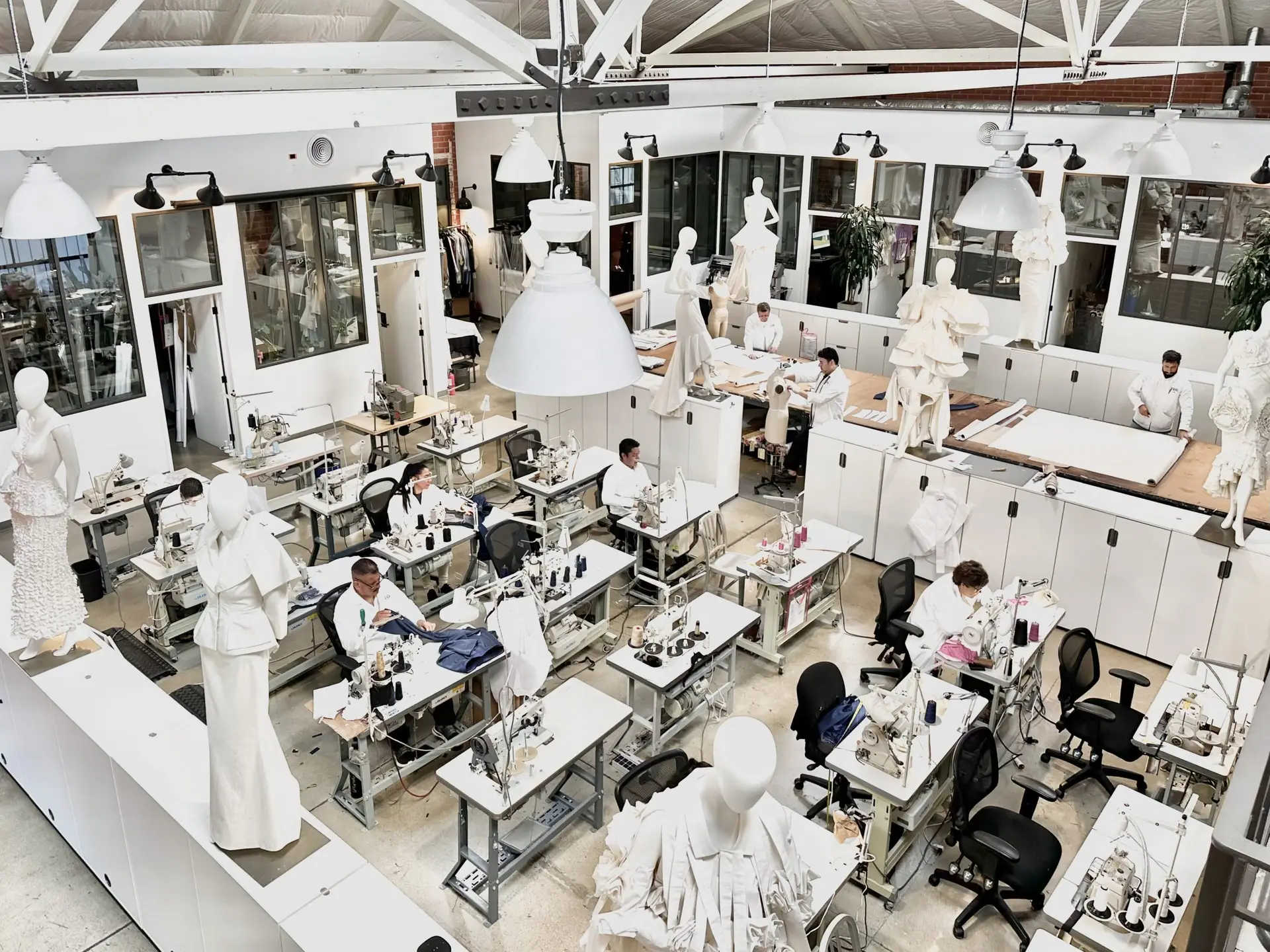
The Evans Group – Ethical clothing manufacturing studio in Los Angeles

Fashion Development & Apparel Manufacturing Insights
0%

Finding a reliable luxury dress supplier requires more than searching polished websites or comparing factory photos. High end dress manufacturing depends on craftsmanship, consistent quality, responsible sourcing, and clear communication. A beautiful portfolio proves little without verified production evidence.

Experienced buyers usually examine fabric samples, stitch density, seam finishing, lining quality, and embellishment security. Request a sample before discussing large orders. Check how the manufacturer handles revisions, deadlines, and unexpected defects. These details reveal more than a sales presentation.

Look worldwide, but investigate locally. Review factory addresses, production equipment, skilled labor, minimum order quantities, and quality control procedures. Ask for recent client references when possible. Confirm certifications and material traceability through credible documentation. Ethical working conditions and lawful business practices should never be treated as optional.

No supplier search is flawless. A factory may perform brilliantly on samples, then struggle with volume. Another may communicate slowly but deliver exceptional tailoring. This is where careful judgment matters. Compare evidence, not promises.

The following guide explains how to identify high end dress manufacturers across major production regions. It considers design expertise, manufacturing capacity, pricing, communication, compliance, and long-term reliability. You will also learn how to evaluate samples, negotiate practical terms, and reduce avoidable sourcing risks. Some advice may need adjustment for your market. That is normal. Fashion production changes quickly, and even experienced buyers must keep questioning their assumptions.
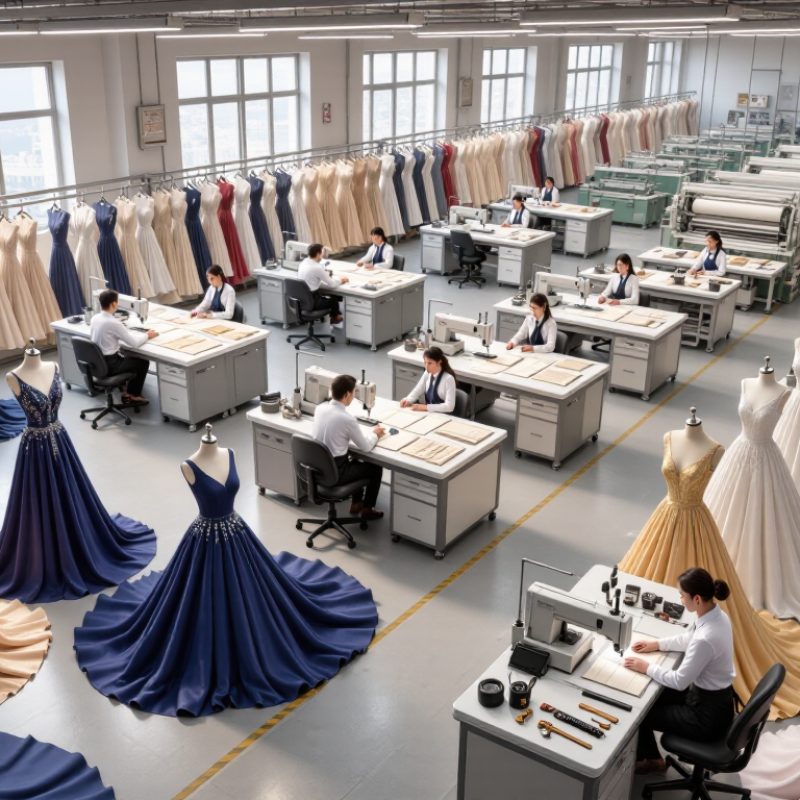
How to Find High End Dress Manufacturers Worldwide?

Define Your High-End Dress Manufacturing Requirements

Define Your High-End Dress Manufacturing Requirements

High-end dress sourcing starts with a precise product brief, not a factory search. Define the silhouette, fabric weight, lining, embroidery, seam allowance, and finishing standards. Record measurable tolerances for measurements, color, stitching, and pressing. A vague phrase like “luxury quality” creates expensive misunderstandings.

Sustainability requirements also need evidence. Textile Exchange’s Materials Market Report 2024 states that global fiber production reached 124 million tonnes in 2023. It could rise to 160 million tonnes by 2030. Ask manufacturers for fiber certificates, supplier traceability, wastewater controls, and social-audit records. Certifications help, but they do not replace factory visits or independent verification. The uncomfortable truth is that a beautiful sample proves very little. Production consistency matters more.

Tips: Prepare a technical pack with graded measurements, artwork, construction drawings, and approved swatches. Set the target quantity, delivery window, payment terms, and acceptable defect rate before requesting quotations. Ask for a pre-production sample and a documented inspection plan. Test delicate fabrics after washing, pressing, and transport simulation. I would also challenge unrealistic deadlines. High-end handwork needs time, and rushing it usually damages consistency. Request references for similar construction, without relying only on photographs.

Research Global Manufacturing Regions and Production Specialties

Finding high-end dress manufacturers worldwide requires more than comparing prices. Regional expertise often determines the final look, feel, and durability of a garment. Italy and France are known for couture techniques, refined tailoring, and complex hand finishing. Portugal offers strong small-batch production and careful quality control. Turkey is experienced with eveningwear, structured fabrics, and flexible sampling. China provides broad technical capacity, from embroidery to advanced fabric development. India specializes in detailed handwork, beadwork, and decorative surface design. Vietnam is increasingly capable in precise sewing and efficient production systems.

My early mistake was choosing a factory by sample appearance alone. The sample looked excellent, but production consistency was weaker. Now, I examine stitching density, seam strength, lining behavior, pressing quality, and fabric shrinkage. I also request production photos, factory certifications, worker-safety information, and independent quality reports. A reliable manufacturer should explain minimum order quantities, lead times, material sourcing, and inspection procedures clearly. Ask whether the team has handled delicate silk, bonded fabrics, or structured corsetry before.

Tips: Match the region to your dress requirements. Request two or three samples from different factories. Test movement, lighting, and washing conditions. Keep technical drawings precise. Confirm tolerances in writing. Do not ignore small defects; they often become expensive at scale. I still allow room for revision, because the first specification is rarely perfect.

Evaluate Manufacturer Quality, Experience, and Ethical Standards

How to Find High End Dress Manufacturers Worldwide?

A high-end dress manufacturer should prove quality through details, not polished promises. Request finished samples with matching fabric, clean seams, secure hems, and balanced proportions. Inspect the inside of each garment. Loose threads often reveal weak production control.

Ask how many years the factory has produced formal or luxury dresses. Experience matters, but it should be relevant to your design category. Review production photos, quality records, and recent buyer references. A reliable manufacturer explains its sample process, inspection points, lead times, and correction policy clearly. I once trusted an attractive sample too quickly. The bulk order exposed uneven stitching and inconsistent measurements. That mistake taught me to inspect several samples, not one.

Ethical standards deserve the same attention as craftsmanship. Ask whether the facility can trace fabric, trims, and subcontracted work. Request current information about worker safety, working hours, wages, and environmental controls. Independent audits can help, but documents need dates and verifiable details. Vague answers are warning signs. So are unusually low prices. Visit the workshop when possible, or arrange a live video inspection. Observe cutting tables, storage areas, ventilation, and final-check procedures. Even experienced buyers can miss hidden subcontracting. Keep written specifications, approval samples, and inspection criteria in one shared file. Clear records reduce disputes and make accountability practical.

Compare Samples, Pricing, Minimum Orders, and Lead Times

How to Find High End Dress Manufacturers Worldwide?

Compare samples before comparing prices. Request the same design, fabric weight, lining, measurements, and finishing details from each manufacturer. Inspect seam accuracy, zipper movement, drape, pressing, and color under daylight. A first sample is rarely perfect. Record every correction in a shared specification sheet.

Pricing requires more than the quoted unit cost. Add sampling fees, pattern adjustments, fabric minimums, packaging, inspection, freight, duties, and payment charges. Ask whether the minimum order applies per style, color, or size range. Some factories accept 100 pieces per style, while others require 300 or more. A lower MOQ may increase the price sharply. That trade-off deserves written evidence.

Lead times should be divided into approval, fabric booking, production, quality inspection, and shipping. A realistic production window may range from 45 to 75 days, excluding material delays. Request a dated timeline, not “fast delivery.” The McKinsey State of Fashion 2024 report identified geopolitical instability as a major concern for 39% of fashion executives. Diversifying suppliers can reduce disruption, but it may complicate quality control. The Fashion on Climate report estimated fashion’s 2018 emissions at 2.1 billion tonnes of CO2 equivalent, about 4% of global emissions. Ask manufacturers about fabric waste, cutting efficiency, and shipment consolidation. Sustainability claims still need records. Cost, speed, and responsibility rarely align perfectly.

How to Find High End Dress Manufacturers Worldwide? - Compare Samples, Pricing, Minimum Orders, and Lead Times

Manufacturing Region Typical Manufacturer Profile Sample Cost
(USD / style)
Sample Lead Time Estimated Bulk Price
(USD / dress)
Typical MOQ
(per style / color)
Bulk Lead Time Best Suited For
Italy Small to mid-sized ateliers with advanced tailoring, couture finishing, and luxury fabric expertise. $250–$800 2–5 weeks $180–$600+ 20–80 pieces 8–16 weeks Couture-inspired, bridal, eveningwear, and highly structured garments.
Portugal Flexible European factories offering strong construction quality, sampling support, and relatively low production volumes. $150–$450 2–4 weeks $90–$280 30–100 pieces 6–12 weeks Premium contemporary labels seeking European production and moderate MOQs.
Turkey Vertically integrated manufacturers with access to fabrics, embroidery, embellishment, and fast regional logistics. $100–$350 2–4 weeks $55–$180 50–200 pieces 5–10 weeks Fashion dresses, occasionwear, embellished styles, and replenishment programs.
China Broad supplier base ranging from specialist luxury workshops to large factories with embroidery, printing, and complex trim capabilities. $80–$300 2–5 weeks $35–$150 100–500 pieces 6–12 weeks Complex designs, detailed decoration, scalable production, and broad material sourcing.
Vietnam Export-oriented factories with reliable sewing quality, strong workmanship, and growing capability in premium womenswear. $90–$280 3–5 weeks $40–$140 150–500 pieces 8–14 weeks Premium ready-to-wear collections requiring consistent sewing and quality control.
India Specialist workshops experienced in hand embroidery, beadwork, sequins, silk garments, and ornate occasionwear. $100–$400 3–6 weeks $45–$190 50–300 pieces 8–16 weeks Embellished evening dresses, bridalwear, artisanal detailing, and special-occasion collections.
United States Domestic sample rooms and small-batch cut-and-sew facilities focused on fit development, speed, and close communication. $200–$700 1–4 weeks $120–$400+ 20–100 pieces 4–10 weeks Small launches, rapid sampling, local oversight, and limited-edition collections.
How to compare suppliers: The figures above are typical industry benchmark ranges for high-end or premium dress production and are not fixed quotations. Actual costs depend on fabric composition, pattern complexity, lining, boning, embroidery, handwork, trims, grading, packaging, testing, shipping terms, and order quantity. Request the same technical package from each manufacturer and compare an identical sample, size set, quality standard, approved materials, and delivery terms before making a final decision.

Finalize Contracts, Quality Controls, and Production Partnerships

How to Find High End Dress Manufacturers Worldwide?

A strong production partnership begins with a precise contract, not a friendly promise. Define the approved sample, fabric composition, color references, measurements, tolerances, packaging, delivery dates, and payment stages. Include ownership of patterns and written procedures for late delivery or defective goods. Local legal review is worthwhile when suppliers operate across borders. I once underestimated the importance of a detailed measurement chart. That mistake created avoidable alterations and delayed approval.

Quality control should happen throughout production. Request fabric testing, pre-production samples, and approval photos before cutting. During sewing, inspect seam strength, lining alignment, zipper function, and pressing quality. Use an independent inspection when distance limits direct supervision. Record defects with photographs and corrective deadlines. A final inspection alone is not enough. It can reveal problems too late.

Tips: Compare at least three manufacturers. Ask for recent production evidence, realistic capacity, and references from comparable projects. Discuss communication hours and escalation contacts. Visit the facility if practical, or arrange a live video tour. A reliable partner explains limitations honestly, rather than promising everything. Still, trust should be earned gradually. Begin with a controlled pilot order, measure results, and revise the partnership terms when evidence exposes weaknesses.

FAQS

Which regions are suitable for high-end dress production?

Italy and France offer couture methods, refined tailoring, and detailed hand finishing. Portugal suits small batches and careful quality control. Turkey handles eveningwear, structured fabrics, and flexible sampling. China provides broad technical capacity, including embroidery and fabric development. India is strong in beadwork and surface decoration. Vietnam offers precise sewing and efficient production systems.

How should I compare manufacturers before choosing one?

Request the same design from two or three factories. Keep fabric weight, lining, measurements, and finishing details identical. Check seams, zippers, drape, pressing, and daylight color. Samples can deceive. Test movement, lighting, and washing conditions before deciding.

What quality details deserve close inspection?

Examine stitching density, seam strength, lining behavior, fabric shrinkage, and pressing quality. Check whether delicate silk, bonded fabrics, or structured corsetry are familiar materials. Small defects often grow during mass production. Details matter.

What information should a manufacturer provide?

Ask for minimum order quantities, lead times, material sources, and inspection procedures. Request production photos, factory certifications, worker-safety information, and independent quality reports. Confirm tolerances in writing. A vague answer is not useful.

How do minimum order quantities affect pricing?

Minimums may apply per style, color, or size range. Some factories accept about 100 pieces per style, while others require 300 or more. Lower minimums can sharply increase unit prices. Ask for written cost details.

What costs should be included beyond the unit price?

Include sampling, pattern changes, fabric minimums, packaging, inspection, freight, duties, and payment charges. A cheap quotation may hide several expenses. Compare the complete production cost, not one attractive number.

How should production lead times be planned?

Divide the schedule into approval, fabric booking, production, inspection, and shipping. A realistic production period may take 45 to 75 days, excluding material delays. Request dated milestones instead of promises about fast delivery. Delays remain possible.

How can production become more responsible and resilient?

Ask about fabric waste, cutting efficiency, shipment consolidation, and supporting records. Diversifying suppliers can reduce disruption, but quality control becomes harder. Confirm every sustainability claim with evidence. My original specifications were too optimistic. Allow time for revision.

Conclusion

Finding the right high end dress manufacturing partner begins with clearly defining your requirements, including design complexity, fabric preferences, finishing details, production volume, target customers, and delivery expectations. Once these standards are established, research manufacturing regions according to their specialties, craftsmanship, technology, and ability to produce sophisticated garments consistently. A strong evaluation should also consider the manufacturer’s experience, quality systems, communication practices, workplace conditions, and commitment to responsible production.

Before making a decision, compare samples carefully to assess construction, fit, materials, embellishments, and finishing quality. Review pricing, minimum order quantities, production capacity, and lead times to ensure the partnership is commercially practical. Finally, establish a detailed contract covering specifications, payment terms, quality inspections, revisions, delivery schedules, and problem-solving procedures. With transparent communication and well-defined controls, high end dress manufacturing can develop into a reliable, long-term production partnership.
Lila

Lila

Lila is a seasoned marketing professional with a deep expertise in our company's core offerings. With a passion for innovation and a thorough understanding of market dynamics, she plays a pivotal role in driving our marketing strategy. Lila's knowledge extends beyond mere promotion; she delves into......