
Fashion Development & Apparel Manufacturing Insights

7 Best Bridalwear Sample Making Services for Global Buyers
Table of Contents
- Bridalwear Sample Making Services: Scope, Purpose, and Key Features
- How to Assess Sample Makers for International Bridalwear Buyers
- Seven Bridalwear Sample Making Services Compared by Core Capabilities
- The Bridal Sample Development Process from Brief to Finished Garment
- Costs, Lead Times, Quality Checks, and Global Shipping Considerations
- FAQS
- Conclusion
- Related Posts
For global buyers, bridalwear is not merely a finished garment. It is a promise tested through fabric, fit, timing, and repeated adjustments. The Knot’s 2023 Real Weddings Study surveyed nearly 10,000 couples and reported an average U.S. wedding spend of $35,000, with approximately 115 guests. Such spending increases expectations for precision, comfort, and visual detail.
Sample quality matters early.
Bridalwear sample making transforms sketches into measurable evidence. A muslin bodice reveals pressure around the bust. A lace placement test shows whether embroidery disappears under studio lighting. A reinforced waist seam can prevent costly alterations later. The McKinsey–BoF State of Fashion 2024 report also highlighted cautious growth, inventory pressure, and stronger demands for operational efficiency. These conditions make dependable sampling partners valuable for international brands.
Bridal designer Monique Lhuillier has said, “A wedding dress is both intimate and personal for a woman—it must reflect the personality and style of the bride.” Her observation explains why standard prototypes often fail. Brides move, sit, photograph, and wear emotional expectations. A beautiful sample can still be uncomfortable.
This guide examines seven Bridalwear sample making services for global buyers. It considers pattern development, draping, couture handwork, grading, communication, quality control, and production readiness. Supplier claims still require verification. One fitting cannot prove consistency. Buyers should request measurement charts, sample timelines, revision policies, and close-up construction photographs. The perfect partner may not be the cheapest. It may be the one that notices a half-centimeter problem before the bride does.
Bridalwear Sample Making Services: Scope, Purpose, and Key Features
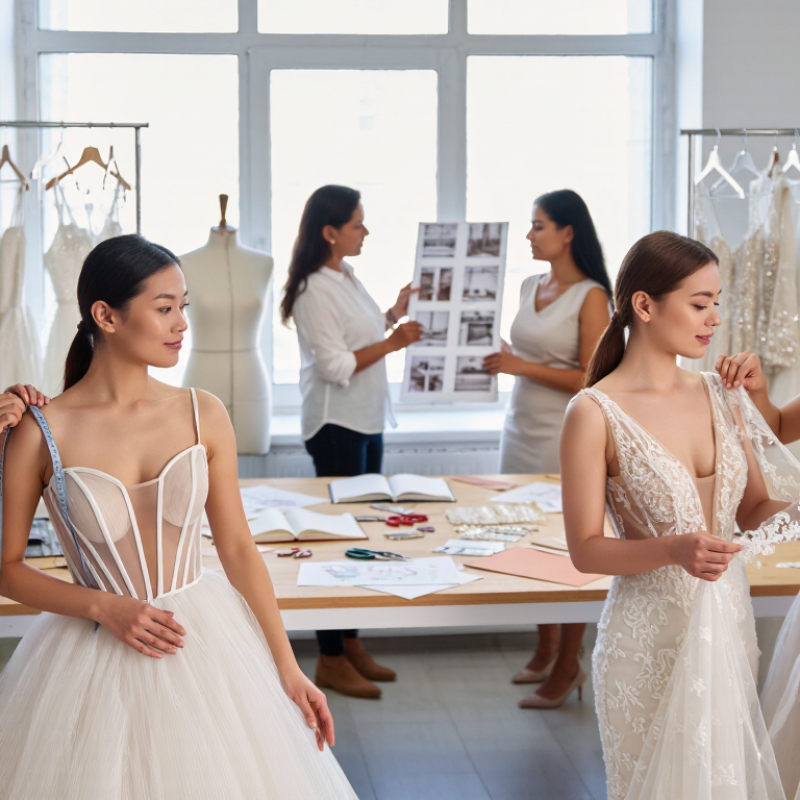
Bridalwear sample making services help global buyers turn a design idea into a measurable, wearable garment. Their scope may include technical drawing review, fabric matching, pattern development, draping, toile construction, fitting, embellishment, and size grading. A skilled sample maker checks seam placement, neckline balance, lining behavior, and support structure before production begins. Small details matter. A two-millimeter adjustment can change the gown’s silhouette.
The purpose is practical: reduce production risk and reveal problems early. Buyers can assess comfort, movement, finishing quality, and material performance through a physical sample. Useful services also document measurements, fabric references, construction notes, and approved changes. Clear communication is essential when teams work across time zones. Photos alone can mislead. A sample that looks elegant on screen may feel restrictive during movement. The first version is rarely perfect, and that is normal. However, repeated revisions without written fit comments can waste time and increase costs.
Tips: Share a complete measurement chart, reference images, and fabric expectations. Ask for a sample schedule with fitting and revision stages. Confirm how delicate lace, boning, seams, closures, and hand-applied details will be inspected. Keep every approval documented. Also, test the sample while walking, sitting, and raising both arms. These simple checks often expose issues that a mannequin conceals.
Bridalwear Sample Making Services: Typical Development Timeline
This chart shows a typical working-day allocation for key bridalwear sample-making stages. Actual timing varies with dress construction, hand embellishment, fabric availability, fitting requirements, and the number of requested revisions.
How to Assess Sample Makers for International Bridalwear Buyers
Assessing a bridalwear sample maker requires more than reviewing attractive photographs. Ask how the team handles lace, boning, corsetry, beading, and delicate layered fabrics. Fit comes first. Request a sample using measurements close to your target customer profile. Inspect shoulder balance, bust support, hem accuracy, and seam finishing under natural light.
A reliable maker should explain the development process clearly. Confirm who creates the pattern, who supervises sewing, and how revisions are recorded. Ask for a measurement chart, fabric requirements, production timeline, and inspection procedure. Small flaws matter. Loose threads, uneven bead spacing, or weak hooks can reveal poor quality control. Request close-up images and a video of the finished sample before approval. Communication also deserves testing; unanswered technical questions may become costly delays.
International buyers should review written terms covering ownership, confidentiality, payment stages, shipping documents, and correction responsibilities. The maker should provide traceable business information and realistic capacity details. Do not trust promises based only on low prices. A cheaper first sample may require several revisions later. An experienced buyer may still miss a hidden issue, especially when lighting disguises color differences or photographs flatten the silhouette. Leave room for improvement. Allow extra time for fitting, fabric behavior, and final measurements. A small pilot order can reveal far more than a confident sales presentation.
Seven Bridalwear Sample Making Services Compared by Core Capabilities
Global bridalwear buyers need sample partners that can prove more than sewing speed. Seven service models stand out by core capability: pattern development, couture draping, 3D design, corsetry, lace placement, hand embellishment, and size grading. Grand View Research reported continued growth in the global bridal wear market, while McKinsey’s State of Fashion 2024 highlighted stronger pressure for speed, traceability, and flexible production. These trends make sample accuracy commercially important.
Pattern specialists should deliver graded blocks, seam allowances, and clear correction records. Draping teams show skill through balanced shoulders and clean movement at the altar. Digital sample services can reduce physical iterations, but screen measurements may miss fabric collapse.
Corsetry experts should test boning channels and waist tension on a real mannequin. Lace-placement teams need mapped motifs, not vague reference images. Embellishment services must secure beads firmly and record replacement quantities. Grading specialists should compare bust, waist, hip, and train proportions across sizes.
The best comparison uses measurable evidence. Ask for a dated prototype, a fabric test, and a measurement chart. SGS textile testing guidance emphasizes dimensional stability, seam strength, and colorfastness as practical quality checks. A useful sample room labels every change near the affected seam. That detail saves time. It is not always followed.
Some buyers still judge services by photographs alone. That is a weak method. A beautiful front view can hide puckering, uneven hems, or uncomfortable armholes.
Sampling remains partly technical and partly judgment-based, so buyers should document both failures and corrections.
The Bridal Sample Development Process from Brief to Finished Garment
A reliable bridal sample begins with a precise design brief. The buyer should share sketches, measurements, construction ideas, fabric preferences, and target pricing. Photos help, but measurements must guide the pattern. Questions about support, lining, closures, and train length should be answered early. Small omissions create expensive revisions.
The sample maker converts the brief into a technical pattern and cutting plan. A first toile can test fit before using costly lace, satin, or beaded fabric. The team checks bust balance, waist placement, neckline comfort, and hem movement. Then, the first finished sample reveals practical issues. It may twist at the side seam. The train may feel heavier than expected. It is rarely perfect.
Fittings should use a realistic size chart and accurate body measurements. Notes must identify each correction, with photographs and clear approval points. The second sample can refine structure, embellishment placement, and finishing quality. Inspect the inside carefully. Clean seams, secure stitching, smooth linings, and stable boning affect wearability. A final review should confirm measurements, color, trims, labels, packaging, and inspection records. For global buyers, clear documentation supports consistent production across later orders. Even experienced teams can miss a minor proportion issue. That is why each revision needs evidence, not guesswork.
Costs, Lead Times, Quality Checks, and Global Shipping Considerations
The seven strongest bridalwear sample-making options include couture ateliers, factory sample rooms, pattern studios, and small-batch manufacturers. Digital-to-physical prototyping teams and regional sourcing partners also help global buyers. Each service handles different needs. A couture atelier suits complex draping and hand-finished details. A factory sample room may offer lower costs and easier production scaling. Request a written quote covering pattern development, fabric sourcing, fittings, revisions, and courier fees. Cheap is not always economical.
Lead times often range from two to eight weeks. Intricate lace, corsetry, and structured underskirts need more time. Ask for a measurement chart and a sample milestone schedule. Quality checks should include seam strength, boning alignment, zipper movement, hem balance, and color consistency under daylight. Inspect the inside, too. Loose threads can reveal rushed work. I have seen beautiful photographs hide poor internal construction.
Tips: Send a technical pack with front, back, and close-up images. Approve the fabric swatch before sampling. Request photos beside a measuring tape. Confirm whether revisions are included. For global shipping, clarify package dimensions, insurance, tracking, and customs paperwork. Use moisture-resistant packaging for delicate silk or beaded panels. Leave buffer time for inspection and possible rework. A two-day delay can disrupt a fitting schedule. Some buyers overlook this. That mistake is understandable, but costly.
FAQS
Include sketches, body measurements, construction ideas, fabric preferences, and target pricing. Mention support, lining, closures, neckline, and train length. Small omissions become expensive revisions.
A toile tests the pattern before using costly lace, satin, or beaded fabric. It can reveal poor bust balance or incorrect waist placement. This step may feel slow, but it prevents waste.
The side seam may twist. The train may feel too heavy. The neckline may feel uncomfortable. A first sample is rarely perfect.
Use accurate body measurements and a realistic size chart. Record every correction with photographs and clear approval points. Photos beside a measuring tape provide useful evidence. Guesswork is risky.
Check seam strength, lining smoothness, boning alignment, and secure stitching. Inspect the inside carefully. Loose threads can indicate rushed work. Beautiful photographs can hide weak construction.
Sample development often takes two to eight weeks. Intricate lace, corsetry, and structured underskirts may require more time. Ask for milestone dates. Allow extra time for rework.
Request costs for pattern development, fabric sourcing, fittings, revisions, and courier services. A low price may exclude important work. Cheap is not always economical.
Check measurements, color, trims, labels, packaging, and inspection records. Test zipper movement and hem balance. Review color under daylight. One minor proportion issue can still be missed.
Confirm package dimensions, insurance, tracking, and customs paperwork. Use moisture-resistant packaging for silk or beaded panels. Leave buffer time before fittings. A two-day delay can disrupt the schedule.
Conclusion
Bridalwear sample making is a crucial service for global buyers who need to turn design concepts into accurate, wearable prototypes before moving into production. This article explains the scope and purpose of sample development, including pattern creation, fabric selection, embellishment testing, fitting adjustments, and construction refinement. It also outlines how buyers can assess sample makers by reviewing technical expertise, communication, quality control, customization capabilities, and experience with international projects.
The guide compares seven bridalwear sample making services according to their core strengths and describes the development process from the initial brief to the finished garment. It also examines practical factors such as sampling costs, lead times, quality inspections, packaging, and global shipping arrangements. With these considerations in mind, international bridalwear buyers can select suitable partners, reduce development risks, improve sample accuracy, and establish a smoother path toward reliable production.

Blog Tags: